Top 5 Ancient Musical Instruments and Their History
“Exploring the timeless sounds that shaped human civilization and inspired modern music“
Introduction: The Birth of Music in Human Civilization
Music has been a part of human life since the earliest days of civilization, long before written language and modern technology existed in any form. Early humans used rhythm, sound, and simple instruments to express emotions, celebrate important events, and communicate within their communities in meaningful and creative ways. These early musical expressions were not just for entertainment but were deeply connected to spiritual beliefs, traditions, and daily life activities.
Ancient people created instruments using natural materials such as wood, bones, animal skin, and stones, showing how creativity can thrive even with limited resources. These instruments became the foundation of modern music and influenced the development of more advanced musical tools. Understanding ancient instruments helps us appreciate how music evolved across cultures and how it continues to connect people even today.
1. Flute: The Oldest Known Musical Instrument
Quick Bio of Flute
| Feature | Details |
| Origin | Prehistoric Europe |
| Age | 40,000+ years |
| Material | Bone, wood |
| Type | Wind instrument |
| Use | Rituals, storytelling |
Origins and Discovery of the Flute
The flute is widely considered one of the oldest musical instruments ever discovered, with evidence dating back over 40,000 years. Archaeologists have found ancient flutes made from animal bones and ivory in caves across Europe, particularly in Germany. These discoveries prove that even early humans had a strong desire to create music and express themselves artistically.
The presence of flutes in ancient sites shows that music was already an important part of human culture during prehistoric times. These instruments were not random creations but carefully crafted tools designed to produce different tones and melodies, reflecting early innovation and creativity.
Construction and Playing Technique
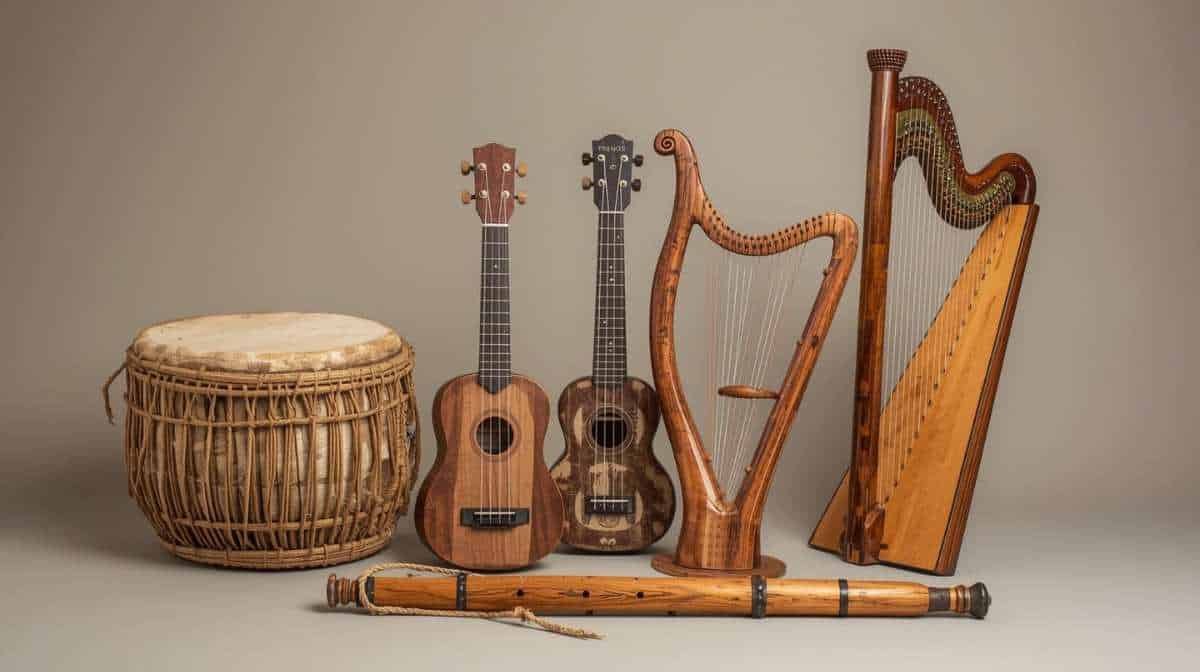
Ancient flutes were made by hollowing out bones or carving wood and creating small holes along the body of the instrument. Players would blow air into one end and cover different holes to produce varying sounds and musical notes. This simple design allowed for a wide range of musical expression despite its basic structure.
The technique required control, precision, and practice, indicating that music was taken seriously even in ancient societies. The flute’s design has remained largely unchanged over thousands of years, showing its timeless effectiveness and importance.
Cultural and Spiritual Importance
The flute was often used in rituals, ceremonies, and storytelling traditions. In many cultures, it was believed to have spiritual significance and was used to connect with nature or higher powers. Its soft and calming sound made it suitable for both entertainment and meditation.
Even today, the flute continues to be used in classical, folk, and modern music, proving its lasting impact on global musical traditions.
2. Lyre: The Voice of Ancient Civilizations
Quick Bio of Lyre
| Feature | Details |
| Origin | Greece, Mesopotamia |
| Age | 3000+ years |
| Material | Wood, strings |
| Type | String instrument |
| Use | Poetry, ceremonies |
Historical Background of the Lyre
The lyre is one of the most iconic instruments of ancient civilizations, particularly in Greece and Mesopotamia, dating back more than 3,000 years. It was often associated with mythology, poetry, and artistic expression, making it an important cultural symbol.
In ancient Greece, the lyre was linked to the god Apollo, representing music, harmony, and knowledge. It was not just an instrument but a symbol of intellectual and artistic development.
Design and Musical Function
The lyre consisted of a wooden body with strings stretched between two arms connected by a crossbar. Players would pluck the strings to create melodies, often accompanying singing or storytelling.
Its design influenced many modern string instruments, including guitars and harps, showing how ancient innovation shaped future developments in music.
Role in Education and Society
The lyre was widely used in education, especially in ancient Greece, where learning music was considered essential for personal development. It was also used in ceremonies, festivals, and theatrical performances.
This shows that music was not just entertainment but an important part of cultural and intellectual life.
3. Drum: The Universal Rhythm of Humanity
Quick Bio of Drum
| Feature | Details |
| Origin | Global (Africa, Asia, Americas) |
| Age | Thousands of years |
| Material | Wood, animal skin |
| Type | Percussion |
| Use | Communication, rituals |
Origins and Global Presence
Drums are among the oldest and most widely used instruments in human history, found in almost every ancient civilization across Africa, Asia, and the Americas. They were created using hollow wooden structures covered with animal skin to produce sound.
The simplicity of the drum made it accessible to many cultures, allowing it to spread quickly across different regions and societies.
Purpose Beyond Music
Drums were not only used for music but also for communication over long distances. In some cultures, drumbeats were used to send messages between villages or tribes.
They also played a major role in rituals, ceremonies, and celebrations, often symbolizing the heartbeat of the community and connecting people emotionally and spiritually.
Enduring Influence
The basic concept of the drum has remained unchanged over time, even though modern drums use advanced materials and designs. Its importance in music continues today in genres like rock, jazz, and traditional music worldwide.
4. Harp: Elegance and Harmony Through Time
Quick Bio of Harp
| Feature | Details |
| Origin | Egypt, Mesopotamia |
| Age | 4000+ years |
| Material | Wood, strings |
| Type | String instrument |
| Use | Royal, spiritual |
Ancient Origins and Development
The harp is one of the oldest string instruments, with origins dating back over 4,000 years in ancient Egypt and Mesopotamia. It was often depicted in ancient art, showing its importance in royal and religious settings.
The instrument evolved over time, becoming more refined and complex in design.
Structure and Musical Characteristics
The harp has a triangular frame with multiple strings of different lengths, each producing a unique note. Players pluck the strings to create smooth and flowing melodies.
Its sound is soft, calming, and emotional, making it ideal for spiritual and ceremonial use.
Cultural Significance
The harp was often associated with royalty, divinity, and artistic beauty. It was used in temples, courts, and important gatherings.
Even today, it remains a symbol of elegance and is widely used in classical music.
5. Ukulele: A Modern Instrument with Ancient Influence
Quick Bio of Ukulele
| Feature | Details |
| Origin | Hawaii (Portuguese roots) |
| Age | 19th century |
| Material | Wood |
| Type | String instrument |
| Use | Entertainment, learning |
Understanding Ukulele History
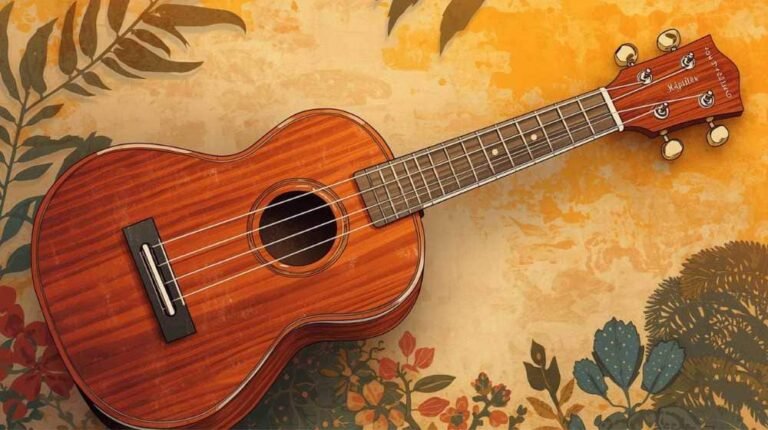
Although the ukulele is considered a relatively modern instrument compared to others on this list, its roots connect to older musical traditions. The ukulele history begins with Portuguese immigrants bringing small string instruments to Hawaii in the 19th century, which were inspired by even older European designs.
This connection shows how musical ideas travel across time and geography, blending ancient and modern influences into something new.
Development and Cultural Integration
Hawaiian craftsmen adapted Portuguese instruments like the cavaquinho and created the ukulele by modifying its structure and tuning. The instrument quickly became popular in Hawaiian culture due to its light sound and easy playability.
It became an important part of cultural expression, used in songs, dances, and celebrations.
Global Popularity and Influence
The ukulele later spread to the United States and other parts of the world, becoming a popular instrument for beginners and professionals alike. Its cheerful tone and simplicity made it widely loved.
By studying Ukulele history Timeline, we can see how even modern instruments are influenced by ancient traditions and cultural exchanges.
Influence of Ancient Instruments on Modern Music
Ancient instruments have played a major role in shaping modern music. Many modern instruments are direct or indirect developments of ancient designs.
For example, the guitar evolved from early string instruments like the lyre and harp, while modern wind instruments have roots in ancient flutes. This shows how music evolves over time while preserving its core ideas.
Materials and Craftsmanship in Ancient Instruments
Ancient instruments were made using natural materials such as wood, bone, stone, and animal skin. Craftsmen used creativity and skill to turn these materials into functional musical tools.
This highlights the importance of innovation and resourcefulness in human history, showing that great ideas can come from simple beginnings.
Music as a Cultural Identity
Music has always been closely linked to cultural identity. Different instruments represent different traditions, beliefs, and lifestyles.
For example, drums are central in African culture, while string instruments like the lyre and harp were important in ancient Europe and the Middle East.
Ukulele as a Cultural Bridge
The ukulele serves as a bridge between ancient and modern music traditions. Its design reflects older instruments, while its popularity shows modern musical trends.
Exploring ukulele history helps us understand how music continues to evolve while staying connected to its roots.
Conclusion: The Timeless Journey of Music
The history of musical instruments is a journey through time, creativity, and culture. From ancient flutes and drums to modern instruments like the ukulele, each has played a role in shaping music.
These instruments remind us that music is a universal language that connects people across generations and cultures.
Even as technology advances, the influence of ancient instruments continues to live on, inspiring new forms of musical expression.