Expert Guide to the Classic Soprano Ukulele
When most people picture a ukulele, they are thinking of the soprano. It is the original size that started in Hawaii, producing that classic, bright, plinking sound.
Choosing your first instrument can be confusing with so many sizes on the market. This breakdown covers the standard soprano size, how to tune it, and how to pick the right one for your playing style.
What Exactly Is a Soprano Ukulele
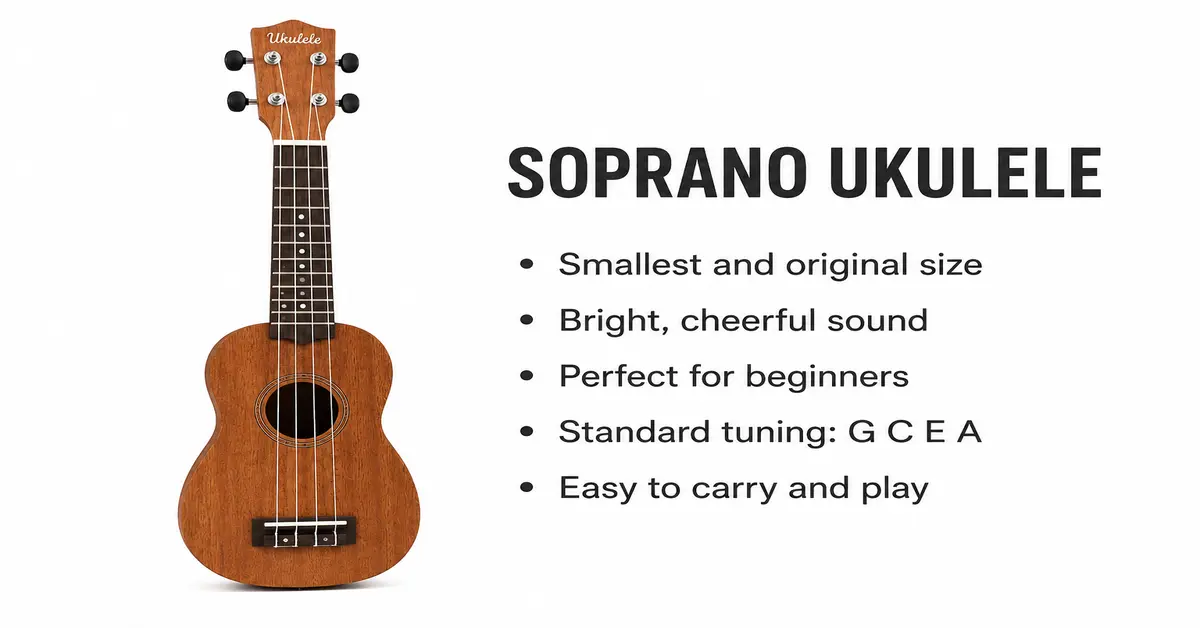
The soprano ukulele is the smallest member of the traditional ukulele family. When I first started playing, I was surprised by how light it felt compared to a guitar.
The standard soprano ukulele size measures exactly 21 inches from end to end. It features a short fretboard, usually holding between 12 and 15 frets. Because the body is small, the sound chamber produces a higher, punchier tone with less bass resonance than its larger cousins.
This specific build creates the traditional tone most people associate with old-school Hawaiian music. If you want that light, cheerful, rhythmic sound, this is the body style you are looking for.
Getting Started with Soprano Ukulele Tuning
Tuning a small instrument can feel tricky at first because tiny turns of the pegs make a big difference in pitch. The standard soprano ukulele tuning uses a pattern called re-entrant tuning.
The strings are tuned to G-C-E-A. Unlike a guitar, the top G string is actually tuned higher than the C string right below it. This gives the instrument its signature bouncy rhythm when you strum chords.
- String 4 (Top): G (High G)
- String 3: C (The lowest pitch string)
- String 2: E
- String 1 (Bottom): A
I recommend downloading a free smartphone tuning app that uses your device microphone. Pluck one string at a time and slowly tighten the tuning peg until the needle hits the center mark. New nylon strings stretch out quickly, so expect to re-tune every ten minutes during your first week of playing.
Choosing a Soprano Ukulele for Beginners
If you are looking for a reliable soprano ukulele for beginners, you do not need to spend a fortune. However, buying the absolute cheapest plastic model usually results in an instrument that will not stay in tune.
Look for a model with geared tuning pegs rather than friction pegs. Friction pegs rely entirely on tight screws to hold the string tension, which often slip mid-song. Geared pegs look like miniature guitar tuners and make adjusting your pitch much easier.
When I test budget models for students, I look for brands like Kala or Cordoba. They make laminate wood options that handle humidity changes well and offer clean fret edges, so you do not scratch your fingers while changing chords.
Soprano Ukulele vs Concert Ukulele: Which Is Better?
The biggest decision you will face is comparing a soprano ukulele vs concert ukulele. The choice comes down to your hand size and the type of music you want to play.
A concert model is slightly longer at 23 inches and has wider spacing between the frets. If you have larger hands or thicker fingers, you might find the soprano fretboard a bit cramped when squeezing into complex chords like E major.
| Feature | Soprano Ukulele | Concert Ukulele |
| Total Length | 21 Inches | 23 Inches |
| Average Frets | 12 – 15 | 15 – 20 |
| Sound Profile | Bright, traditional, punchy | Deeper, louder, warmer |
| Fret Spacing | Tight / Best for smaller hands | Wider / Best for fingerpicking |
The concert body also has a deeper soundboard, making it noticeably louder. However, if you want the ultimate portable travel instrument that delivers the classic island sound, the smaller model wins. For a complete breakdown of all the different body shapes available, check out our types of ukuleles guide to picking right one to see how scale lengths alter your playing experience.
How to Find the Best Soprano Ukulele
Finding the best soprano ukulele means looking closely at the materials. You will generally see two options: laminate wood and solid wood.
Laminate models use thin layers of wood glued together. They are highly durable, resistant to cracking, and affordable. Solid wood models, usually made from mahogany or Hawaiian Koa, cost more but mature in sound as the wood ages, offering a richer tone.
In my testing, a solid mahogany top gives you the best balance. It tames some of the harsh, tinny high frequencies common in cheap plastics, leaving you with a sweet, clear acoustic tone that projects well across a room.
Overview
The soprano ukulele is the traditional 21-inch size known for its bright, punchy tone. It uses standard G-C-E-A tuning and its compact fretboard makes it highly portable and excellent for beginners with smaller hands.
Key Details
- Size: 21 inches total length with 12 to 15 frets.
- Tuning: Re-entrant G-C-E-A configuration.
- Materials: Durable laminate for beginners; solid Koa or Mahogany for advanced tone.
- Best For: Rhythmic strumming, travel, and traditional Hawaiian music styles.
Frequently Asked Questions
Can adults play a soprano size instrument comfortably?
Yes. Many famous adult musicians play this size exclusively. While the fretboard is compact, proper technique involves using the very tips of your fingers rather than the pads, which clears up plenty of space on the frets.
What is the difference between high G and low G tuning?
Standard instruments come with a thin high G string. Low G tuning replaces that top string with a thicker, wound string tuned an octave lower. This gives the small body a much deeper, more guitar-like sound.
How often should I change the nylon strings?
For casual players, changing strings once every six to twelve months is plenty. If the strings start looking frayed near the frets or struggle to stay in tune after a proper wear-in period, it is time for a new set.
Do I need a guitar pick to play this instrument?
No, traditional playing uses the index finger or thumb for strumming. If you prefer using a pick, look for a soft felt pick designed specifically for nylon strings to avoid scratching the wood finish.
Is it hard to transition from a guitar to this size?
Not at all. The chord shapes are much simpler because you only manage four strings instead of six. The finger placements are similar to placing a capo on the fifth fret of a guitar and playing the top four strings.
Picking Your Instrument
Getting a great sound is easy once you know what to look for. Focus on finding a model with decent geared tuners, get comfortable with the G-C-E-A string sequence, and enjoy the portable, bright music that only this classic body style can deliver.