Types of Ukuleles: Your Ultimate Guide to Picking the Right One
Quick Answer: Which Ukulele Type Is Best?
The best ukulele type for most beginners is the concert ukulele because it is easy to hold, has more fret space than a soprano, and still gives a bright classic ukulele sound. Soprano is best for small hands and a traditional tone, tenor is best for fuller sound, and baritone is best for guitar players.
| Ukulele Type | Best For | Size | Sound |
|---|
| Soprano | Kids, small hands, classic sound | Smallest | Bright and traditional |
| Concert | Most beginners | Medium-small | Balanced and clear |
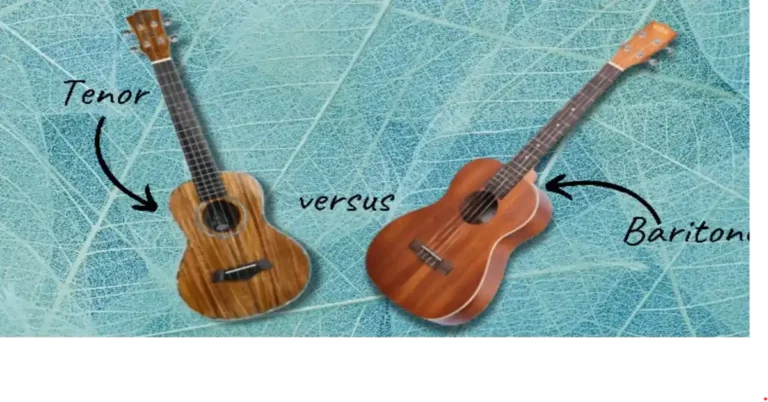
| Tenor | Adults, fingerpicking | Larger | Full and warm |
| Baritone | Guitar players | Largest | Deep and guitar-like |
The ukulele is one of the most accessible and fun instruments to learn. With its cheerful tones and simple structure, it’s no wonder it has become so popular around the world. Whether you’re a beginner picking up the instrument for the first time or a seasoned musician looking to add another ukulele to your collection, understanding the different types of ukuleles is crucial to making the right choice.
Each type offers distinct features, sizes, and tonal qualities, and knowing these differences will help you select the one that best suits your playing style. Let’s dive into the various types of ukuleles, exploring their characteristics, and features, and helping you find the perfect match.
READ THIS ALSO “Ukulele History Timeline“
1. Soprano Ukulele: The Traditional and Classic Sound
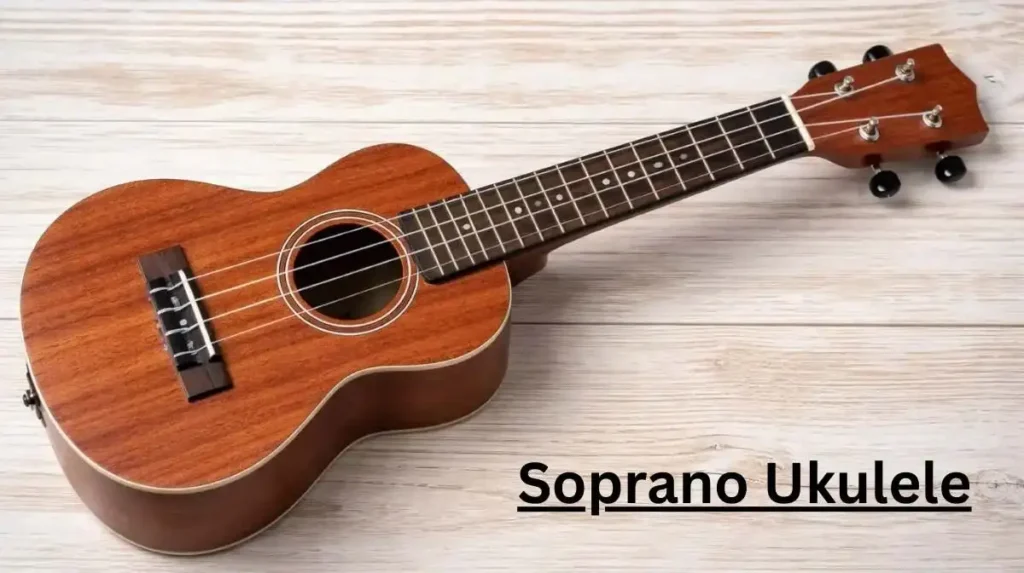
The soprano ukulele is the smallest and most iconic ukulele. It’s the one most people picture when they think of the instrument. It is known for its cheerful and bright tone, which makes it the go-to choice for beginners. With a scale length of 13 inches, the soprano ukulele is the most compact option in the ukulele family, making it perfect for children or those with smaller hands.
While small, it doesn’t lack in sound. The soprano produces a lively, bright tone that is perfect for simple chords and open strumming. It’s often the first choice for those just starting their musical journey.
Features and Characteristics of the Soprano Ukulele:
- Size: 13-inch scale length
- Sound: High-pitched, bright, and cheerful
- Best for: Beginners, children, or players who want the classic, cheerful ukulele sound
- Tone: Light, sharp, and bouncy
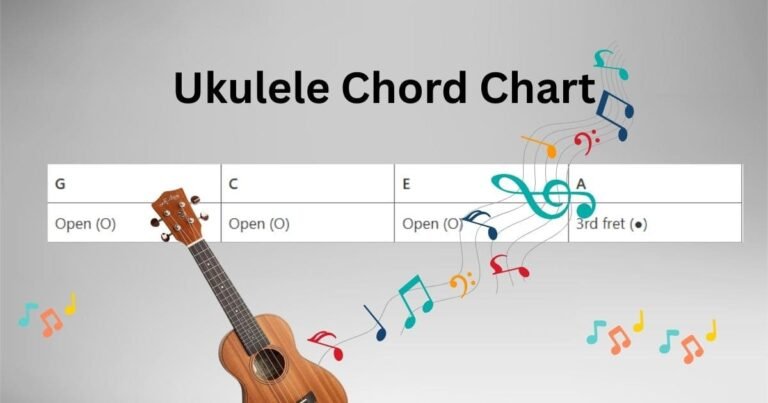
- Tuning: G-C-E-A (Standard tuning)
- Playability: Extremely comfortable for small hands
Soprano Ukulele Sound Chart:
| Feature | Description |
| Tone | Bright, high-pitched, and cheerful |
| Volume | Moderate to loud |
| Resonance | Short and sharp |
| Tuning Range | High, perfect for traditional songs |
Pros:
- Ideal for beginners and younger players
- Classic ukulele sound
- Lightweight and portable
Cons:
- Smaller fretboard may be challenging for adults with larger hands
- Limited tonal range
2. Concert Ukulele: Larger Body, Richer Sound
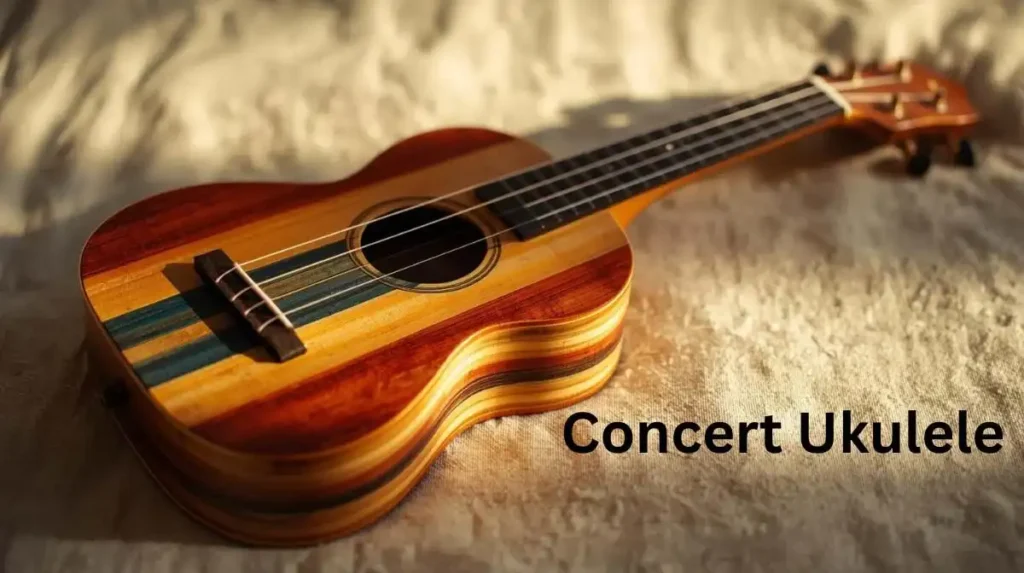
The concert ukulele offers more room to move your fingers while still maintaining the cheerful tones of the soprano. With a 15-inch scale length, it sits between the soprano and tenor in terms of size and sound. This extra space makes it easier for intermediate players to develop their skills. It also produces a fuller, richer tone compared to the soprano, making it ideal for players who want a bit more depth in their sound.
The concert ukulele provides a balance between size, playability, and sound quality, making it one of the most popular choices for players who need more space but still want that signature ukulele brightness.
Features and Characteristics of the Concert Ukulele:
- Size: 15-inch scale length
- Sound: Fuller and richer than the soprano, yet still bright
- Best for: Intermediate players or those who want a bit more space while playing
- Tone: Warm and balanced, with a hint of brightness
- Tuning: G-C-E-A (Standard tuning)
- Playability: More comfortable for adults or players with larger hands
Concert Ukulele Sound Chart:
| Feature | Description |
| Tone | Full and balanced with some warmth |
| Volume | Slightly louder than soprano |
| Resonance | Richer, with more sustain |
| Tuning Range | Excellent for a variety of playing styles |
Pros:
- Comfortable size with more room for finger placement
- Balanced tone, suitable for various playing styles
- Ideal for players looking for more depth
Cons:
- Larger than the soprano, but still not as deep as a tenor or baritone
3. Tenor Ukulele: Bigger Body, Deeper Sound
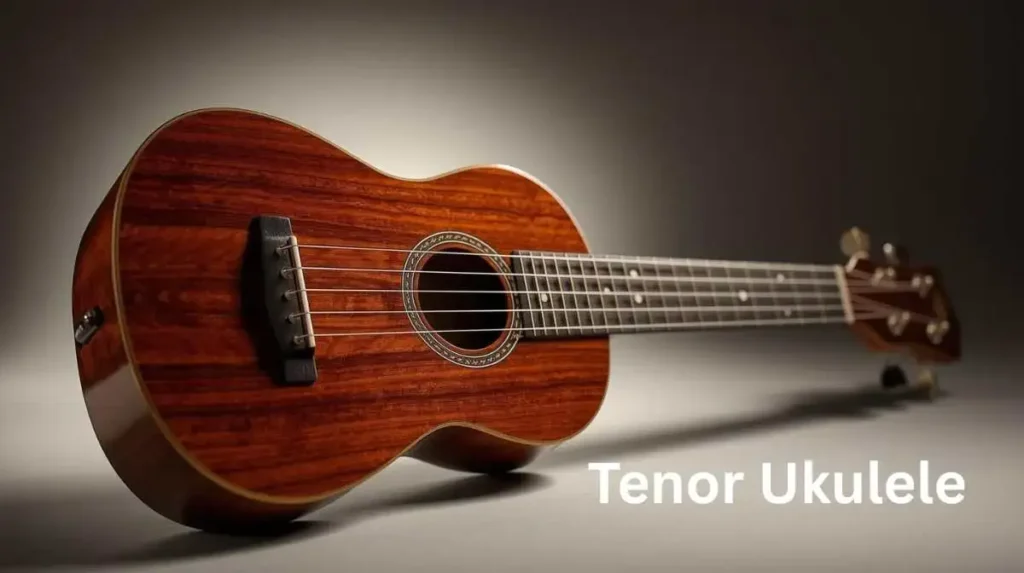
The tenor ukulele is a favorite among more experienced players. With a 17-inch scale length, it offers even more space for your fingers, making it ideal for complex playing styles like fingerpicking. Its larger size also contributes to a deeper, richer sound, offering a more resonant and fuller tone compared to the soprano and concert ukuleles. The tenor is versatile enough for both strumming and intricate solo work.
If you’re looking for an instrument that offers more tonal depth and the ability to experiment with advanced techniques, the tenor ukulele is a fantastic choice.
Features and Characteristics of the Tenor Ukulele:
- Size: 17-inch scale length
- Sound: Rich, deep, and resonant, ideal for more advanced techniques
- Best for: Intermediate to advanced players, soloists, or those looking for a deeper, more resonant tone
- Tone: Balanced with deeper notes and more sustain
- Tuning: G-C-E-A (Standard tuning)
- Playability: Offers more room for complex chord shapes and fingerstyle playing
Tenor Ukulele Sound Chart:
| Feature | Description |
| Tone | Deeper and more resonant than concert |
| Volume | Louder with more sustain |
| Resonance | Richer with excellent sustain |
| Tuning Range | Flexible for various music genres |
Pros:
- Deeper, fuller tone ideal for fingerpicking and advanced techniques
- Comfortable for larger hands
- Suitable for a wide range of music styles
Cons:
- Larger size might be cumbersome for players with smaller hands
4. Baritone Ukulele: For a Guitar-Like Sound
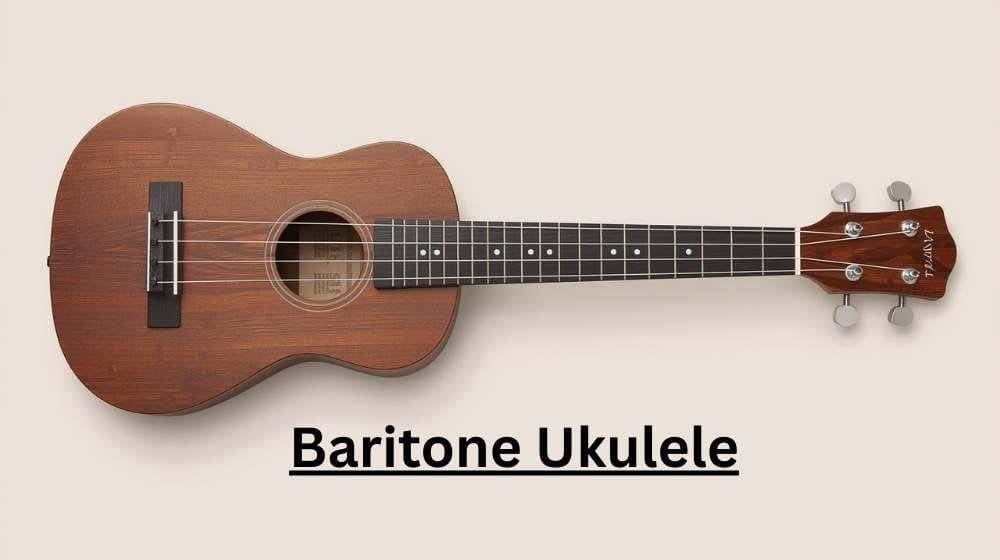
The baritone ukulele is the largest of the traditional ukuleles. With a scale length of around 19 inches, it produces the deepest, most resonant tones. Its size and tuning give it a sound that’s closer to a guitar than a typical ukulele. The baritone is tuned to D-G-B-E, which is the same as the highest four strings of a guitar. This makes it ideal for guitarists transitioning to ukulele or players who want a deeper, more mellow sound.
Unlike soprano, concert, and tenor ukuleles, the baritone ukulele usually uses D-G-B-E tuning. This makes it feel more familiar to guitar players and gives it a deeper sound.
Features and Characteristics of the Baritone Ukulele:
- Size: 19-inch scale length
- Sound: The deepest, most guitar-like tone
- Best for: Guitarists or advanced players who prefer a deeper sound
- Tone: Mellow and rich, perfect for playing more intricate melodies
- Tuning: D-G-B-E (Baritone tuning)
- Playability: Suitable for guitarists or players used to larger instruments
Baritone Ukulele Sound Chart:
| Feature | Description |
| Tone | Deep, warm, and bass-heavy |
| Volume | Louder and more resonant than smaller ukuleles |
| Resonance | Long sustain, perfect for deeper songs |
| Tuning Range | Similar to guitar’s top four strings |
Pros:
- Guitar-like tuning and sound
- Perfect for players who want a more mellow, bass-heavy tone
- Great for guitarists transitioning to ukulele
Cons:
- Larger size might be difficult for players with smaller hands
- Different tuning requires adjustment for players used to standard ukulele tunings
5. Travel Ukulele: Ultra-Portable and Ready for Adventure

For those who are constantly on the go, the travel ukulele is the perfect companion. With a scale length of about 12-13 inches, the travel ukulele is smaller than most ukuleles, making it highly portable without sacrificing too much sound quality. It’s designed for musicians who want to take their instrument with them wherever they go, whether it’s on a plane, a road trip, or even to the beach.
Though smaller than a standard soprano, the travel ukulele still has that familiar, cheerful sound. It’s perfect for quick practice sessions, impromptu performances, or casual play.
Features and Characteristics of the Travel Ukulele:
- Size: 12-13 inch scale length
- Sound: Bright, similar to soprano ukuleles
- Best for: Musicians on the move, casual players, or anyone needing a compact instrument
- Tone: Similar to soprano but with a more compressed resonance
- Tuning: G-C-E-A (Standard tuning)
- Playability: Easy to carry and play, perfect for quick sessions
Travel Ukulele Sound Chart:
| Feature | Description |
| Tone | Bright but less resonant than larger ukuleles |
| Volume | Slightly quieter than traditional ukuleles |
| Resonance | Shorter resonance, less sustain |
| Tuning Range | Same as soprano ukuleles, but less projection |
Pros:
- Extremely portable and lightweight
- Great for quick play sessions
- Ideal for travel and casual use
Cons:
- Less resonant and loud compared to full-size ukuleles
6. Electric Ukulele: Amplify Your Sound

The electric ukulele takes traditional ukulele sounds to the next level. With an integrated pickup, it allows players to plug into an amplifier, producing louder and more dynamic sound. This version is perfect for performers who need to be heard in larger venues or for musicians looking to experiment with electronic effects.
Electric ukuleles come in various sizes (soprano, concert, or tenor) and offer the same playability as acoustic versions, but with the added bonus of amplification.
Features and Characteristics of the Electric Ukulele:
- Size: Available in soprano, concert, and tenor sizes
- Sound: Amplified, allowing for more volume and effect customization
- Best for: Performers or musicians looking for amplified sound
- Tone: Adjustable via amplifiers and effects
- Tuning: G-C-E-A (Standard tuning)
- Playability: Similar to acoustic ukuleles but with added electronic components
Electric Ukulele Sound Chart:
| Feature | Description |
| Tone | Amplified, customizable with effects |
| Volume | Adjustable via an amplifier |
| Resonance | Limited resonance, as it relies on amplification |
| Tuning Range | Standard, but with more electronic manipulation |
Pros:
- Amplified for louder sound
- Versatile with electronic effects
- Great for performances and larger venues
Cons:
- Requires an amplifier and additional gear
- More expensive than acoustic models
7. Bass Ukulele: For Low-End Grooves
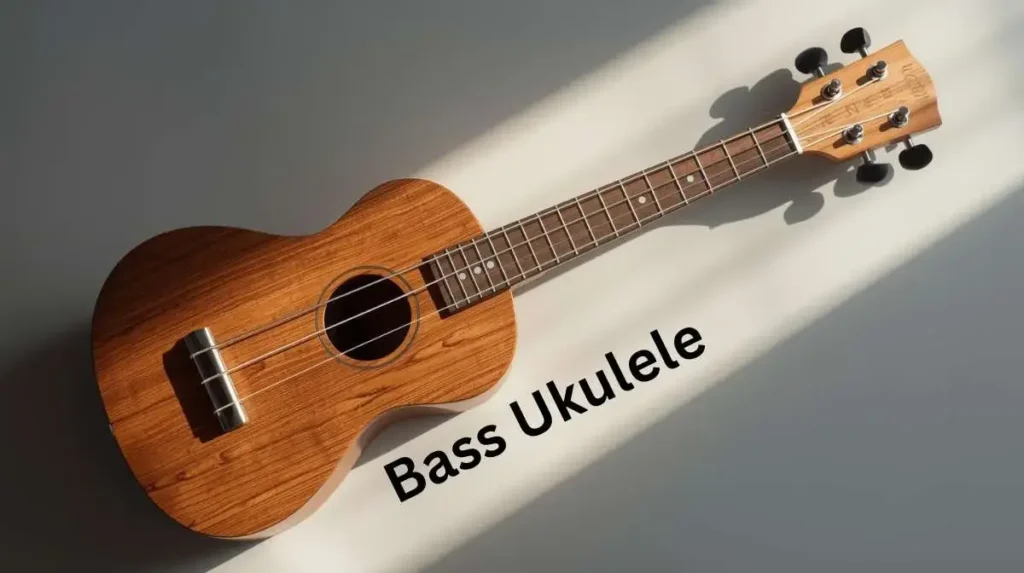
The bass ukulele is an exciting variation designed to replicate the sound of a bass guitar while still maintaining the ukulele’s compact form. It uses thicker strings and a larger body to produce deep, bass-heavy tones. Ideal for musicians looking to add low-end grooves to their music or experiment with unique sounds, the bass ukulele is perfect for those who want a ukulele with more depth.
Features and Characteristics of the Bass Ukulele:
- Size: Larger than standard ukuleles
- Sound: Deep, bass-heavy tones
- Best for: Musicians wanting a bass-heavy ukulele or those experimenting with unique sounds
- Tone: Low-end and groovy
- Tuning: G-C-E-A (Standard tuning) or D-G-B-E (Bass-heavy tuning)
- Playability: Similar to bass guitar playability with thicker strings
Bass Ukulele Sound Chart:
| Feature | Description |
| Tone | Deep, bass-heavy, groovy |
| Volume | Low and resonant |
| Resonance | Deep with full-body sound |
| Tuning Range | Deep and low frequencies |
Pros:
- Provides a bass-heavy sound
- Unique and fun to play
- Adds a new dimension to ukulele music
Cons:
- Limited to bass playing, not ideal for standard ukulele songs
Ukulele Types Comparison Table
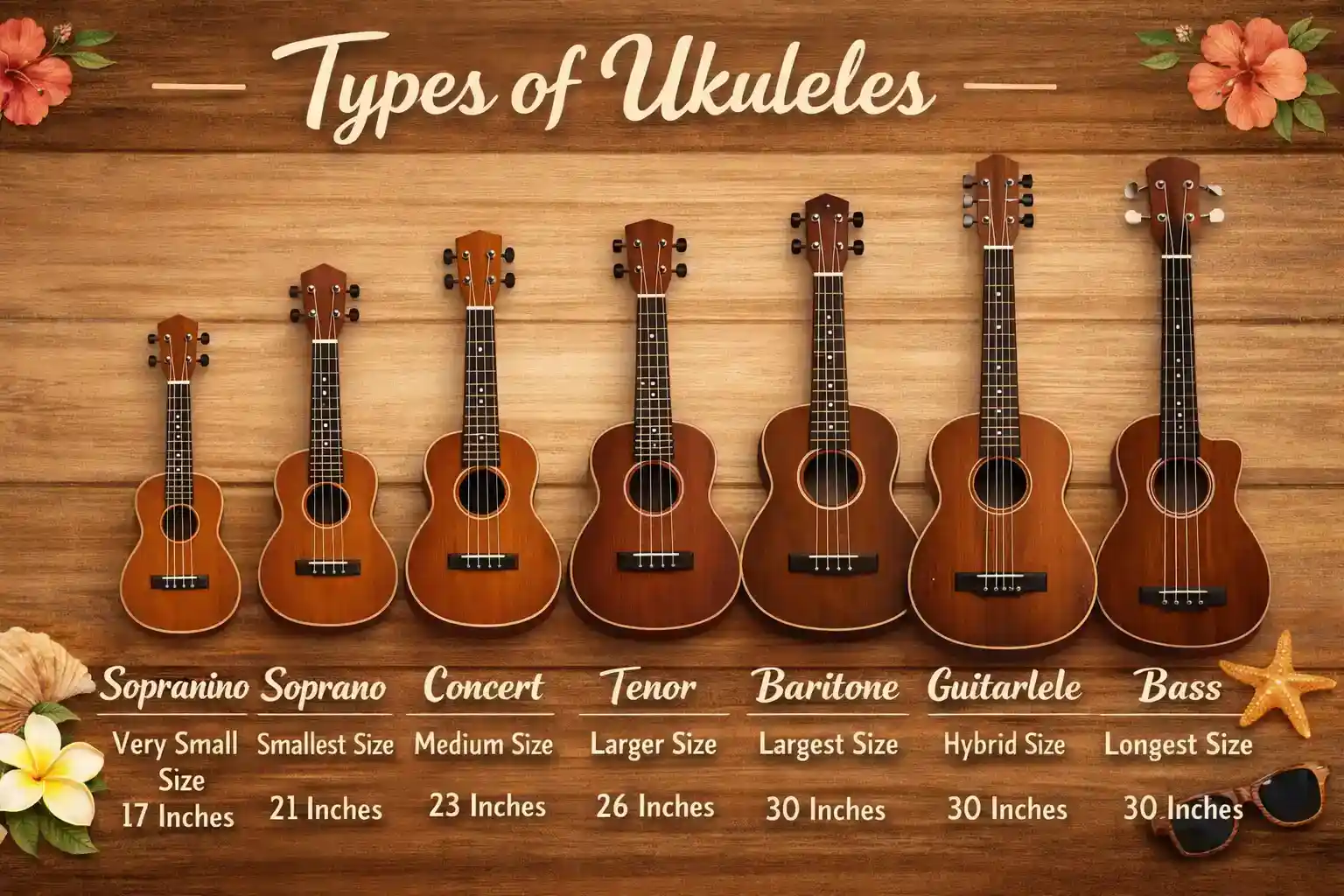
Here is a quick comparison of the 7 main ukulele types, including their sizes, tuning, sound, and best uses. This table will help you choose the right ukulele faster.
| Ukulele Type | Approx Size | Tuning | Sound | Best For |
|---|---|---|---|---|
| Soprano Ukulele | 21 inches | G-C-E-A | Bright, classic, traditional | Kids, small hands, travel, classic ukulele sound |
| Concert Ukulele | 23 inches | G-C-E-A | Balanced, clear, fuller than soprano | Most beginners and casual players |
| Tenor Ukulele | 26 inches | G-C-E-A | Warm, rich, louder | Adults, fingerpicking, performers |
| Baritone Ukulele | 29–30 inches | D-G-B-E | Deep, guitar-like | Guitar players and deeper sound lovers |
| Pineapple Ukulele | Usually soprano/concert size | G-C-E-A | Warm, round, sweet | Players who want a unique body shape |
| Banjolele | Varies | Usually G-C-E-A | Loud, bright, banjo-like | Folk, vintage, and louder playing styles |
| Bass Ukulele | Around 30 inches | E-A-D-G | Deep bass sound | Bass lines, bands, and rhythm support |
Which Type of Ukulele Is Best for Beginners?
For most beginners, a concert ukulele is a good first choice. It is small enough to hold easily, but it does not feel too tight in the hands. When you start learning basic chords, your fingers need a little space. A concert ukulele gives you that space, so changing chords feels easier.
A soprano ukulele is also good if you like the small classic ukulele sound. It is light, easy to carry, and fun to play. But for some adults, the frets can feel a little close together.
A tenor ukulele is better if you want a bigger and warmer sound. It also gives more room for your fingers, so many players like it for fingerpicking.
A baritone ukulele is a better choice for guitar players. It usually uses D-G-B-E tuning, which feels closer to guitar. But if you are starting from zero, a concert or soprano ukulele is usually easier.
My simple advice: choose a concert ukulele if this is your first ukulele. Choose soprano if you want the smallest classic sound. Choose tenor if you want a fuller sound. Choose baritone if you already play guitar.
Conclusion: Choosing the Right Ukulele for You
Choosing the right ukulele depends on your personal preferences and musical needs. Whether you’re just starting out with the bright and cheerful sound of a soprano or looking for a deeper, guitar-like tone with a baritone, there’s a ukulele for every player. Consider the size, tone, and playability of each type to make an informed decision. Experimenting with different ukuleles is the best way to find the one that suits your style and inspires your music.
FAQ’s
What are the main types of ukuleles?
The main types of ukuleles are soprano, concert, tenor, and baritone. These are the four standard sizes most players compare first.
Which ukulele type is best for beginners?
Concert ukulele is best for most beginners because it is easy to hold and gives more finger space than a soprano ukulele.
What is the difference between soprano and concert ukulele?
A soprano ukulele is smaller and brighter. A concert ukulele is a little bigger, louder, and easier for many adults to play.
Is tenor ukulele better than concert?
Tenor is better if you want a warmer sound and more space for fingerpicking. Concert is better if you want a simple beginner-friendly size.
Is baritone ukulele tuned like a guitar?
Yes, baritone ukulele usually uses D-G-B-E tuning, which is like the top four strings of a guitar.