Baritone Ukulele: A Comprehensive Guide to Its Features, Tuning, and How to Play
If you’re seeking a ukulele that produces a richer, fuller sound with deeper tones than the traditional soprano or concert ukuleles, then the baritone ukulele might be the perfect instrument for you. Unlike its smaller cousins, the baritone ukulele has a longer scale length, a larger body, and a different tuning that provides a sound closer to a guitar. Whether you’re a beginner or an experienced player, This ukulele offers unique opportunities for musical exploration. This guide will cover everything you need to know about the baritone ukulele, including its features, tuning, comparison to other ukuleles, and how to play it effectively.
From the differences in size and tone to how you can utilize this ukulele for various musical styles, this guide will help you understand why this instrument is gaining so much popularity. Whether you’re transitioning from guitar or just seeking a new ukulele experience, you’ll find that the baritone ukulele offers a unique, enjoyable playing experience that’s well worth exploring.
READ THIS ALSO: The Ultimate Guide to Ukulele Chord Chart
What Makes the Baritone Ukulele Unique?
The baritone ukulele stands out among its counterparts for several reasons. With its larger body, deeper tone, and guitar-like tuning, it offers a unique sound that is both resonant and mellow. Let’s take a closer look at the specific features that make the baritone ukulele special:
1. Larger Size and Scale Length
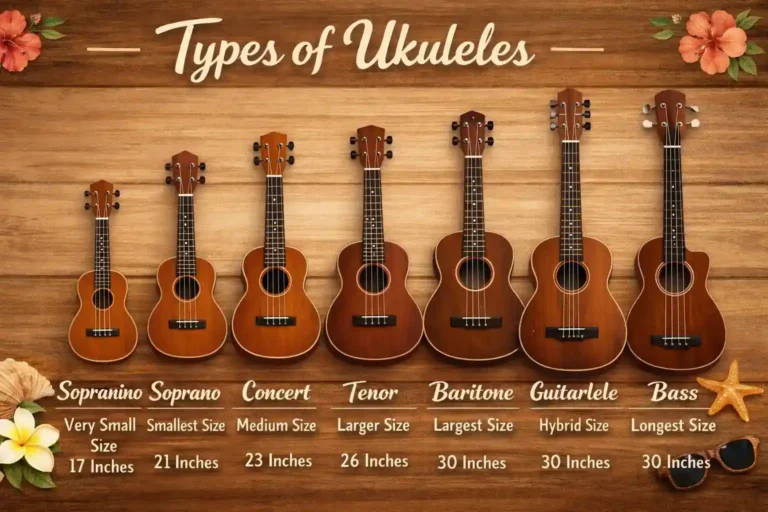
This ukulele is the largest of all ukulele types, measuring approximately 30 inches (76 cm) in overall length, compared to the soprano, concert, and tenor ukuleles, which are smaller in size. The baritone’s scale length is typically 19 inches (48 cm), making it longer than the other ukuleles. The larger body and longer neck contribute to its fuller, richer sound.
2. D-G-B-E Tuning
One of the defining features of the baritone ukulele is its tuning, which is a D-G-B-E setup. This tuning is the same as the top four strings of a guitar, which gives the instrument a sound closer to a guitar than to traditional ukuleles that are usually tuned to G-C-E-A.
This tuning is especially beneficial for guitarists transitioning to the ukulele, as the chord shapes and fingerings are similar to those used in guitar playing. If you already play the guitar, This ukulele will feel familiar and comfortable right from the start.
3. Richer, Deeper Sound
Because of its larger body and lower tuning, the baritone ukulele produces a deeper, more resonant tone compared to other ukuleles. While traditional ukuleles have a bright, high-pitched sound, the baritone’s D-G-B-E tuning and larger size result in a tone that is much warmer and more guitar-like. It’s perfect for players who want to explore a deeper sound without switching to a full-size guitar.
Baritone Ukulele vs. Other Ukulele Sizes
The baritone ukulele is often compared to the soprano, concert, and tenor ukuleles due to their differences in size, tuning, and sound. Here’s a comparison to help you understand the key distinctions between the different ukulele sizes:
| Feature | Soprano Ukulele | Concert Ukulele | Tenor Ukulele | Baritone Ukulele |
| Length | 21 inches | 23 inches | 26 inches | 30 inches |
| Scale Length | 13.5 inches | 15 inches | 17 inches | 19 inches |
| Tuning | G-C-E-A | G-C-E-A | G-C-E-A | D-G-B-E |
| Sound | Bright, high-pitched | Balanced, clear | Full, warm | Deep, rich, guitar-like |
| Ideal For | Beginners, children | Intermediate players | Advanced players | Guitarists, deeper tones |
Key Differences Between the Baritone Ukulele and Other Ukuleles
- Size and Playability: This ukulele is much larger than the soprano, concert, and tenor ukuleles. This makes it more suitable for players looking for a fuller sound or those coming from a guitar background. The larger size means a wider fretboard, which might be easier for guitarists who are used to bigger instruments.
- Tuning and Sound: The biggest difference between the baritone and the other ukulele sizes is the tuning. The D-G-B-E tuning on the baritone ukulele is tuned like the highest four strings of a guitar, giving it a deeper, more mellow tone compared to the bright and cheerful sound of the G-C-E-A tuning on the smaller ukuleles.
How to Tune and Play
Tuning the Baritone Ukulele
The standard tuning for This ukulele is D-G-B-E, which is identical to the top four strings of a guitar. Here’s how you can tune each string:
- D – 4th string
- G – 3rd string
- B – 2nd string
- E – 1st string
To tune your baritone ukulele, you can use an electronic tuner or a tuning app that supports D-G-B-E tuning. Since the baritone is tuned lower than other ukuleles, it’s essential to ensure the strings are properly tuned to get that deep, resonant sound.
Playing Baritone Ukulele Chords
Since the baritone ukulele is tuned similarly to a guitar, many of the guitar chord shapes will work on the baritone. For example, a C major chord can be played in the same way as on a guitar:
- C major (C): Play the 3rd fret on the A string, letting the other strings ring open.
Here are a few common chords that you can play on This ukulele:
- C major (C): 3rd fret of the A string
- F major (F): 1st fret of the E string, 2nd fret of the G string
- G7: 2nd fret of the C string, 1st fret of the E string, 2nd fret of the A string
- D major (D): 2nd fret of the G string, 2nd fret of the E string, 2nd fret of the A string
Strumming and Fingerpicking
The baritone ukulele can be strummed using the traditional down-up motion, or you can experiment with fingerpicking for a more melodic, individual sound. The wider spacing between the strings on the baritone makes fingerpicking easier, allowing you to pluck the strings individually and create more complex arrangements.
Transitioning from Guitar to Baritone Ukulele
For guitar players, the baritone ukulele will feel very familiar, as the tuning is the same as the top four strings of the guitar. You can use guitar chord shapes directly on This ukulele. For example, a C major chord on the guitar can be played the same way on This ukulele. If you already know guitar chords, you’ll find it easy to transition to the baritone ukulele.
READ THIS ALSO: Ukulele Tapping
Why Choose the Baritone Ukulele?
The baritone ukulele is an ideal instrument for several reasons, especially for those who want a unique and deeper sound. Here are a few reasons why you might want to consider choosing a baritone:
1. Guitar-Like Sound
If you’re a guitarist or prefer a deeper, fuller tone, the baritone ukulele will feel like a natural fit. Its tuning and sound are closer to the guitar than any other ukulele, making it an excellent choice for guitarists who want to try their hand at playing a smaller, more portable instrument.
2. Rich, Mellow Tone
The baritone ukulele has a deeper, richer tone compared to the smaller ukuleles. This makes it ideal for more acoustic, blues, or folk music, and it’s especially good for those who enjoy a guitar-like vibe.
3. Larger Neck for Easier Playability
The larger neck of the baritone ukulele makes it more comfortable for people with larger hands or those accustomed to the fret spacing on a guitar. It’s a great instrument for players who find the smaller ukuleles too cramped.
Tips for Playing the Baritone
- Start with Guitar Chords: If you’re a guitarist, start by using your guitar chord shapes on the baritone ukulele. This will help you get comfortable quickly with the instrument.
- Experiment with Strumming Patterns: Play around with different strumming patterns to find the rhythm that suits the song you’re playing. Use both downstrokes and upstrokes to give your playing variety.
- Try Fingerpicking: The baritone ukulele‘s larger strings make fingerpicking more feasible. Experiment with fingerpicking to add depth and texture to your playing.
- Tune Regularly: Since This ukulele is tuned lower than other ukuleles, check your tuning frequently. Use a tuner or tuning app to keep the instrument in the correct pitch.
- Use It for Different Genres: The baritone ukulele’s deeper sound makes it suitable for a variety of genres, from folk and blues to acoustic rock. Don’t be afraid to experiment with different musical styles.
Conclusion
The baritone ukulele is a unique and versatile instrument that offers a deeper, richer sound compared to the smaller soprano, concert, and tenor ukuleles. Its D-G-B-E tuning, which mirrors the highest four strings of a guitar, makes it perfect for guitarists and players looking for a more guitar-like sound. Whether you’re a guitarist, a seasoned ukulele player, or someone simply seeking a new sound, This ukulele provides a rich, melodic experience that’s sure to inspire.
By understanding its size, tuning, and potential for creating beautiful, complex music, you’ll be able to make the most of your baritone ukulele and enjoy its deep, mellow tones. So, pick up a baritone ukulele and start exploring a new world of musical possibilities!