The Early Ukulele Luthiers: Manuel Nunes, Augusto Dias, and Jose do Espirito Santo
Introduction: The Roots of Ukulele Craftsmanship
The ukulele is more than just an instrument; it’s a symbol of Hawaiian culture and joy. Known for its bright, bouncy sound and compact design, it has become a global favorite for musicians of all ages.
But the journey of the ukulele—from a small Portuguese stringed instrument to the beloved Hawaiian icon—is a story of innovation, culture, and craftsmanship.
At the heart of this story are three key figures: Manuel Nunes, Augusto Dias, and Jose do Espirito Santo. These early luthiers were instrumental in shaping the ukulele into the instrument we know today.
Their work laid the foundation for what would become a key symbol of Hawaiian music, culture, and identity.
This article will explore their lives, their contributions to the ukulele’s evolution, and how their innovations have influenced the world of music.
The Journey of the Ukulele: From Portugal to Hawaii
Before the ukulele’s rise to fame in Hawaii, it had humble beginnings in Portugal. The ancestors of the ukulele were small, four-stringed instruments such as the machete and rajão.
These instruments were brought to Hawaii by Portuguese immigrants in the late 1800s. The unique sound of these instruments quickly captured the attention of the local Hawaiian people.
The Arrival in Hawaii
In 1878, a large wave of Portuguese immigrants arrived in Hawaii, mostly to work on the sugar plantations. Many of these immigrants brought their musical instruments with them, including the machete.
As the Hawaiians saw and played these instruments, they began making modifications, shrinking the size and adapting the shape to suit their musical preferences.
The word “ukulele” itself is believed to have come from a Hawaiian interpretation of the Portuguese phrase “jumping flea,” which referred to the small size of the instrument and its lively, bouncy sound. Over time, the ukulele became more distinct, and its popularity grew rapidly in Hawaiian society.
Early Hawaiian Adaptation
Hawaiians embraced the ukulele and gave it a place in their musical culture. As the instrument gained traction, it became a central element of Hawaiian music, which combined Polynesian, African, and European influences.
The instrument’s portability, ease of learning, and cheerful sound made it perfect for social gatherings, dances, and hula performances.
By the early 20th century, the ukulele had firmly established itself as a staple in Hawaiian music and culture.
Its widespread popularity among musicians and tourists alike set the stage for the ukulele’s journey from a regional folk instrument to a global phenomenon.
Manuel Nunes: The Pioneer of Ukulele Craftsmanship
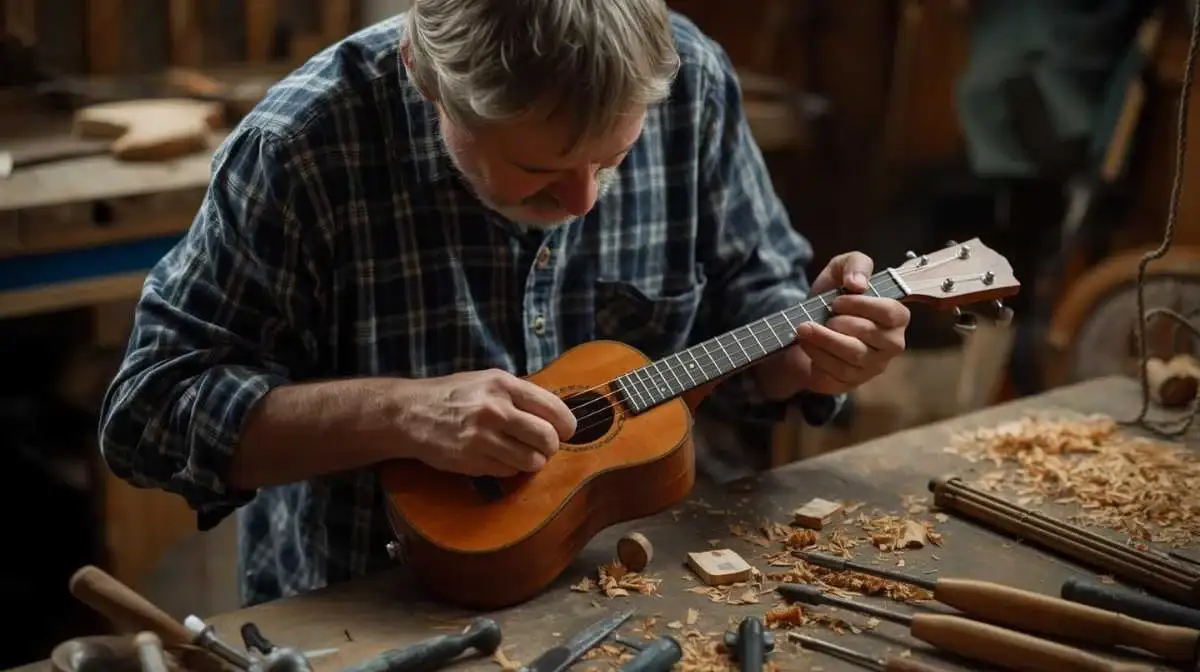
Manuel Nunes, often credited as the “father of the ukulele,” played a crucial role in the instrument’s development and popularization.
He was born in Portugal in the mid-1800s and immigrated to Hawaii in the late 1800s, where he began crafting his own version of the ukulele.
Nunes’ Role in Ukulele Development
Nunes recognized the growing demand for ukuleles in Hawaii and set to work creating his own version. He became one of the first luthiers to make ukuleles that were specifically designed for Hawaiian musicians.
Nunes crafted ukuleles with a four-string setup, using local materials like koa wood, which gave the instrument its distinctive sound.
In addition to his craftsmanship, Nunes was also one of the first to mass-produce ukuleles. His instruments became very popular in Hawaii and quickly became the instrument of choice for local musicians.
Nunes’ ukuleles helped elevate the instrument from a foreign curiosity to a central part of Hawaiian music.
Key Design Features
One of Nunes’ most important innovations was the size and shape of the ukulele. His ukuleles were smaller than traditional instruments like the machete, making them more portable and easier to play.
Nunes also improved the neck of the ukulele, making it longer and more comfortable for musicians to hold and play.
Nunes’ use of koa wood, a local Hawaiian wood known for its warmth and resonance, became a hallmark of his ukuleles.
The wood not only contributed to the unique sound of the instrument but also made it more durable and aesthetically pleasing. These design features would go on to become standard in the construction of modern ukuleles.
Nunes’ Legacy
Nunes’ influence on the ukulele’s development cannot be overstated. He helped establish the ukulele as an iconic Hawaiian instrument, and his designs became the blueprint for future ukulele makers.
His ukuleles were known for their craftsmanship and superior sound quality, which helped them become widely popular in Hawaii and beyond.
The legacy of Nunes lives on today in the ukulele designs that are still made using his principles.
Augusto Dias: The Innovator of Ukulele Design
While Nunes is often credited with pioneering the ukulele in Hawaii, Augusto Dias took the instrument to the next level.
Dias, also from Portugal, arrived in Hawaii shortly after Nunes and set up his own workshop, where he began crafting his own versions of the ukulele.
The Life of Augusto Dias
Dias was an experienced luthier before moving to Hawaii. He was keenly aware of the growing demand for ukuleles and began producing his own instruments.
Dias was known for his meticulous craftsmanship and his ability to produce high-quality instruments. His ukuleles were highly regarded for their tone, playability, and visual appeal.
Innovations and Contributions
Dias made several key contributions to the ukulele’s design. He experimented with different types of wood, including rare and exotic woods, to improve the instrument’s tone.
His use of higher-quality materials resulted in ukuleles that had a richer, fuller sound compared to earlier versions.
In addition to the materials, Dias also introduced new shaping techniques. He created ukuleles with a slightly deeper body than the traditional design, which increased the instrument’s resonance and overall sound quality.
His ukuleles became highly sought after, and many musicians preferred them for their superior craftsmanship.
Dias’ Ukuleles and Their Influence
Dias’ ukuleles became extremely popular, both in Hawaii and abroad. His innovations in design and sound helped shape the evolution of the instrument. In many ways, Dias bridged the gap between the traditional design of the ukulele and the modern instrument that would go on to take the world by storm.
His work helped establish the ukulele as not just a Hawaiian instrument, but a global one.
Jose do Espirito Santo: The Unsung Hero of Ukulele Craft
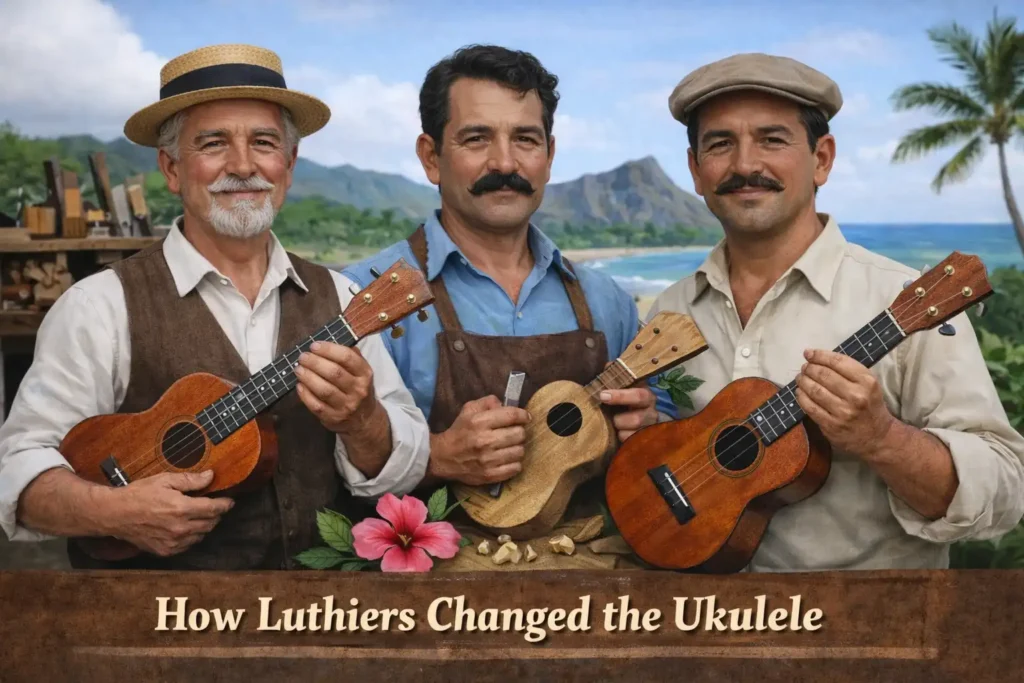
While Manuel Nunes and Augusto Dias are often regarded as the most influential early ukulele luthiers, Jose do Espirito Santo also made significant contributions to the development of the instrument.
Though he did not achieve the same level of fame as Nunes and Dias, his craftsmanship was highly respected among those who knew his work.
Introduction to Espirito Santo’s Work
Jose do Espirito Santo was another Portuguese luthier who settled in Hawaii. He began crafting ukuleles in the early 1900s, following in the footsteps of Nunes and Dias.
Espirito Santo was known for his precision and attention to detail. His ukuleles were highly regarded for their craftsmanship and sound quality.
Design Philosophy
Espirito Santo’s design philosophy was centered around traditional craftsmanship. He paid close attention to every detail of the ukulele, from the shape of the body to the finish of the wood.
Espirito Santo’s ukuleles were known for their clean lines, smooth surfaces, and consistent quality.
While he didn’t introduce any groundbreaking innovations like Dias, Espirito Santo’s work helped solidify the ukulele as a high-quality instrument.
His attention to detail and dedication to his craft made him a respected figure in the ukulele-making community.
Legacy and Recognition
Though Espirito Santo’s work is often overshadowed by Nunes and Dias, his ukuleles remain highly prized by collectors. His contributions to the craft helped elevate the ukulele to its status as a popular and respected instrument.
Today, Espirito Santo’s legacy is remembered by those who appreciate fine craftsmanship and the history of the ukulele.
The Role of Early Luthiers in the Hawaiian Music Scene
The early ukulele luthiers didn’t just build instruments—they helped shape the very sound of Hawaiian music.
Their contributions to the ukulele’s development allowed musicians to play the instrument in new and exciting ways.
Early Ukulele Players and Performers
Many early Hawaiian musicians played a key role in popularizing the ukulele. Musicians like King David Kalākaua and other performers helped bring the ukulele into the spotlight.
These musicians collaborated with luthiers like Nunes and Dias to create music that would become iconic.
The Ukulele’s Rise to Fame
By the 1920s, the ukulele had become synonymous with Hawaiian music. Its light, cheerful sound became the perfect companion to hula dancing and traditional Hawaiian performances.
As more tourists visited Hawaii, the ukulele became an essential part of their experience, and its popularity spread to the mainland United States and beyond.
The Global Impact of the Ukulele
The ukulele’s popularity didn’t stop in Hawaii. As the instrument gained recognition, it began to spread around the world.
By the 1920s, the ukulele had reached the mainland United States and Europe, becoming a popular instrument in jazz bands, folk music, and vaudeville performances.
Ukulele’s Global Reach
The ukulele’s popularity skyrocketed in the United States during the early 20th century. Performers like Ukulele Ike (Cliff Edwards) helped bring the instrument into the mainstream, playing a major role in its success in American entertainment.
Today, the ukulele is loved by musicians across the world, from Hawaii to Japan, Europe, and beyond.
Modern Ukulele Culture
Today, the ukulele enjoys a global following. It’s a favorite among beginner musicians, and many professional artists, including Jake Shimabukuro, have showcased the instrument’s incredible versatility.
The ukulele has transcended its origins as a Hawaiian folk instrument to become a beloved instrument in many genres of music.
How Ukulele Craftsmanship Has Evolved
Ukulele craftsmanship has continued to evolve since the time of Nunes, Dias, and Espirito Santo.
Modern luthiers continue to honor the traditions of these early craftsmen while also introducing new materials and technologies to enhance the instrument.
Modern Luthiers and Innovation
Contemporary ukulele makers use a combination of traditional techniques and modern technology.
New materials like carbon fiber and synthetic woods are being used to craft durable and lightweight ukuleles, while CNC routing has allowed for precision in the construction of the instrument.
Technological Advancements
Advancements in technology have allowed for better control over the ukulele’s construction, ensuring that each instrument is perfectly shaped and tuned.
Modern ukulele makers have access to tools and materials that the early luthiers could only dream of, but the foundation of their craftsmanship remains unchanged.
Conclusion: Honoring the Legacy of Ukulele Luthiers
The work of Manuel Nunes, Augusto Dias, and Jose do Espirito Santo set the stage for the ukulele’s rise to global fame.
Their craftsmanship, creativity, and attention to detail helped transform the ukulele from a simple folk instrument into a beloved symbol of Hawaiian culture. Today, the ukulele continues to thrive, thanks to the work of these early luthiers.
Their legacy lives on in the sound of the instrument and the joy it brings to musicians and listeners around the world.