
The Role of Madeira, Portugal in Ukulele History
The ukulele is a popular instrument known for its cheerful, bright sound. It is often linked to Hawaii, but its origins actually trace back to Portugal, specifically to the island of Madeira.
The role of Madeira in the history of the ukulele is often overlooked, yet it played an essential part in the instrument’s creation and growth. This article explores Madeira’s contribution to the ukulele and how this small Portuguese island helped shape the iconic instrument we know today.
What is the Ukulele?
The ukulele is a small, four-stringed instrument that is easy to play and fun to listen to. It’s often used in Hawaiian music, but its origins lie in Portugal.
The ukulele evolved from a small Portuguese instrument called the machete, which was brought to Hawaii by Portuguese immigrants, including those from Madeira.
Today, the ukulele is celebrated worldwide for its light, upbeat sound. It is especially popular for beginners because of its small size and simple chords. The ukulele’s musical journey began in Madeira, and from there, it grew into the worldwide sensation it is today.
CLICK HERE TO READ FULL HISTORY OF UKULELE
Madeira and its Musical Heritage
Madeira is a small, mountainous island in the Atlantic Ocean. It belongs to Portugal and has a rich history of music and culture.
The people of Madeira have long used stringed instruments in their folk music, with the machete being one of the most prominent.
The machete was the direct ancestor of the ukulele, and it played an important role in the musical traditions of the island.
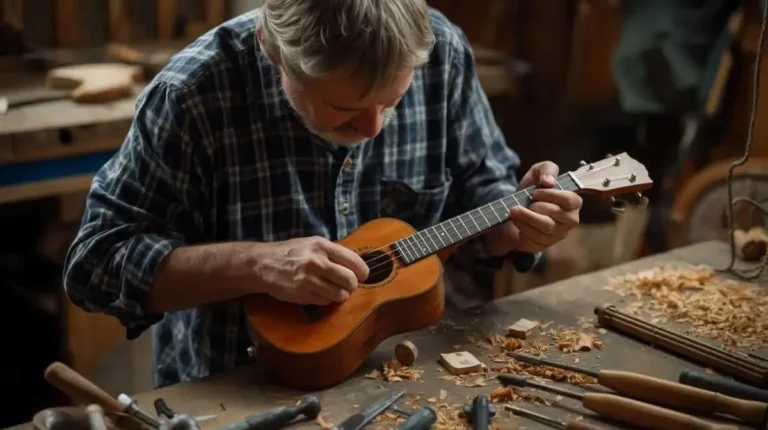
The tradition of crafting stringed instruments, including the machete, has been passed down through generations of Madeira’s artisans.
These luthiers (instrument makers) used local woods like cedar and pine to create instruments with beautiful sounds.
The machete, made in Madeira, would eventually be transformed into the ukulele by Hawaiian luthiers.
The Machete: The Precursor to the Ukulele
The machete was a small, four-stringed instrument played in Madeira and the Azores. It had a similar shape to the ukulele but was slightly different in size and tuning.
The machete was used in folk music across Portugal, especially in Madeira, where it was a popular choice for lively tunes and dances.
When Portuguese immigrants arrived in Hawaii, they brought their musical traditions with them, including the machete.
Hawaiian craftsmen adapted the machete, changing its shape, tuning, and size, turning it into what we now know as the ukulele.
Portuguese Immigrants and the Ukulele’s Birth
In the late 19th century, many Portuguese immigrants moved to Hawaii, particularly to work on sugar plantations.
These immigrants, many from Madeira, brought their cultural traditions with them, including their love for music and instruments like the machete.
In Hawaii, the machete was altered to better suit local tastes and needs. Hawaiian luthiers increased its size, changed the wood used to make it, and modified its tuning.
This is when the ukulele was born—a new instrument with a unique sound that combined Portuguese craftsmanship with Hawaiian innovation.
How the Ukulele Got Its Name
The name ukulele comes from the Hawaiian word for “jumping flea.” This was a playful reference to the way musicians’ fingers moved quickly over the instrument’s strings, making it sound like the hopping motion of a flea.
The name perfectly captured the energy and charm of the ukulele.
The Ukulele’s Evolution in Hawaii
Once the ukulele was created in Hawaii, it quickly became popular. It was used in local music performances, particularly in hula dances. Its cheerful, light sound made it a perfect companion for the lively rhythms of Hawaiian music.
As the ukulele gained popularity in Hawaii, it began to spread to the mainland United States. By the early 20th century, the ukulele was featured in American pop culture, especially in vaudeville performances.
The instrument’s easy-to-learn nature and upbeat sound made it a favorite among both performers and audiences.
Hawaiian Influence on Ukulele Music
The Hawaiian influence on ukulele music was key in its early popularity. Local Hawaiian musicians, including Roy Smeck and Cliff Edwards, helped introduce the ukulele to a wider audience.
These artists played the ukulele in various music styles, from jazz to pop, showing how versatile the instrument could be.
The ukulele’s connection to Hawaiian culture gave it a unique sound that became synonymous with the islands. Yet, even as the instrument grew in popularity, its roots in Portugal, specifically Madeira, were still deeply embedded.
The Ukulele’s Spread to the United States
The ukulele’s rise to fame in the United States began in the 1910s and 1920s. As it gained more attention in Hawaiian music and culture, it soon made its way to the mainland.
American pop culture embraced the ukulele, particularly through performances on Broadway and in Hollywood films.
By the 1920s, major American manufacturers began mass-producing ukuleles. These companies made the instrument more affordable and accessible, further helping to spread its popularity.
The instrument was also featured in radio broadcasts and in movies, making it a household name in the United States.
Ukulele Craftsmanship: Madeira’s Lasting Influence
Though Hawaii became the center of the ukulele’s popularity, Madeira’s craftsmanship played a crucial role in the instrument’s development.
The traditional methods of luthiery in Madeira helped influence the design and construction of early ukuleles.
Even today, the ukulele’s design continues to reflect the craftsmanship of its Portuguese ancestors. Many ukuleles are still made with materials like koa wood, a Hawaiian wood traditionally used in ukulele production.
However, the knowledge and skills of Madeira’s luthiers helped lay the foundation for the ukulele’s evolution and continued craftsmanship.
Modern Ukuleles and Madeira’s Influence
Today, many ukuleles are crafted in Hawaii, Japan, and other parts of the world, but the influence of Madeira is still seen in the fine details. Many luthiers, including those in Madeira, continue to craft stringed instruments, including ukuleles.
These modern ukuleles are built with precision and care, maintaining the tradition of craftsmanship that originated in Madeira.
The Ukulele in Modern Music
In the 21st century, the ukulele has seen a resurgence in popularity. Its easy-to-learn nature and joyful sound have made it a favorite among musicians of all ages.
Famous musicians like Jake Shimabukuro and Israel Kamakawiwo‘ole have brought the ukulele into the global spotlight once again.
The instrument has moved beyond its Hawaiian roots and can now be heard in a variety of musical genres, from pop to folk to classical music.
Its versatility, combined with its rich history, continues to captivate musicians and audiences worldwide.
Ukulele and Global Popularity
From its humble beginnings in Madeira to its rise to fame in Hawaii, the ukulele has become a global symbol of happiness and creativity.
Its spread across the world is a testament to how musical traditions can evolve and adapt, creating new forms of expression while staying true to their roots.
Madeira’s Role in Ukulele History: A Lasting Legacy
Madeira’s role in the creation of the ukulele is a significant yet often overlooked part of the instrument’s history. The island’s contribution through the machete laid the groundwork for the ukulele’s transformation in Hawaii.
The craftsmanship of Madeira’s luthiers and the musical traditions of its people helped shape the ukulele’s unique sound and design.
A Cultural Bridge: From Madeira to Hawaii and Beyond
Madeira’s influence on the ukulele shows how cultures can shape each other over time. Portuguese immigrants brought their musical instruments to Hawaii, where they were modified to create something new.
The ukulele, as it is known today, is a blend of Portuguese craftsmanship and Hawaiian culture, making it a truly unique instrument that has touched the hearts of people all around the world.
Madeira’s contribution to the ukulele’s history is not just about the instrument’s design but also about the cultural exchange that shaped its identity.
The ukulele continues to serve as a reminder of how music can bridge cultures and connect people across generations.
Conclusion: Madeira and the Ukulele’s Legacy
The history of the ukulele is a fascinating tale of migration, innovation, and cultural fusion. Madeira, Portugal, played a crucial role in the creation of the ukulele, from its influence through the machete to its lasting impact on the instrument’s design.
While Hawaii is often considered the home of the ukulele, Madeira’s contribution to its origins cannot be overlooked.
The ukulele’s joyful sound continues to bring people together, whether through traditional Hawaiian music or modern pop songs.
From its beginnings in Madeira to its global popularity today, the ukulele stands as a symbol of cultural exchange, creativity, and the timeless power of music.
CLICK HERE TO READ FULL HISTORY OF UKULELE FOR CHILDREN