Ukulele in the 1920s: Why Jazz Age America Loved It
The ukulele in 1920s America didn’t sneak in through the back door. It arrived at the front — cheerfully strummed by vaudeville stars, plastered across sheet music covers, and broadcast into millions of living rooms by the new wonder of radio. Within a decade, an instrument most Americans had never seen before 1915 became a cultural fixture: sold in department stores, played at parlor parties, and tied to everything breezy about the Jazz Age.
But how did a four-stringed instrument born in the Portuguese-influenced workshops of Honolulu become the sound of 1920s America? Most histories credit one obvious moment, then move on. The real chain runs deeper — an exposition that drew nearly 18 million visitors, a Tin Pan Alley publishing machine hungry for amateur-friendly music, and one vaudevillian who proved the ukulele could genuinely swing. The single event that launched all of this is one most histories treat as a footnote.
Key takeaways:
- The 1915 Panama-Pacific International Exposition introduced millions of mainland Americans to the ukulele through live Hawaiian Pavilion performances over nine months.
- Tin Pan Alley publishers drove a sheet music boom from 1916 onward, deliberately marketing the ukulele as simple enough for any amateur to learn in an afternoon.
- Cliff Edwards, known as “Ukulele Ike,” was the decade’s most prominent advocate — his Broadway appearances and commercial recordings made the instrument credible beyond novelty status.
- May Singhi Breen, “The Ukulele Lady,” broadcast ukulele instruction nationwide on radio, creating a self-reinforcing cycle between listening, purchasing music, and home practice.
- The arrival of sound cinema after 1927 shifted Americans toward passive entertainment, and the ukulele’s first golden age wound down by the early 1930s.
- Mass manufacturing by Martin Guitars, Regal, and department store mail-order catalogs put playable instruments within reach of most middle-class households.
Why the 1920s were the ukulele’s first golden age
Three forces converged on American culture at once in the early 1920s: a middle class with more leisure time than any previous generation had enjoyed, a music publishing industry seeking instruments that ordinary people could play at home without formal lessons, and a broadcast technology that could carry music into places no touring performer could reach. The ukulele fit all three requirements simultaneously, and that alignment made its rise almost inevitable.
The instrument itself was the pitch
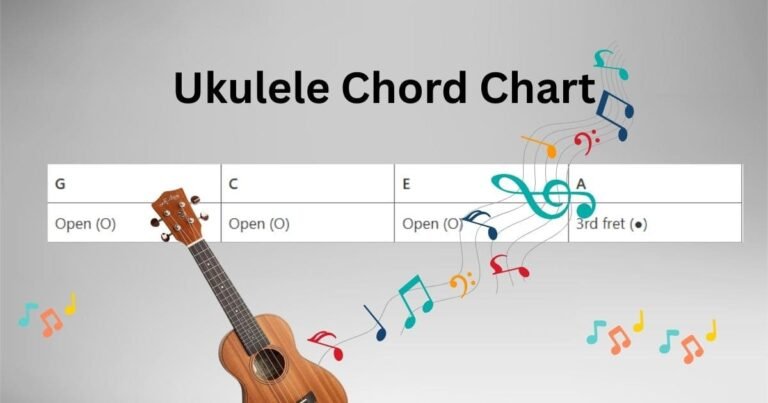
Part of the ukulele’s appeal was almost embarrassingly simple. Three chords, learned in an afternoon, were enough to play along with popular songs the same evening.
A piano required years of formal instruction. A guitar demanded more finger strength and a larger initial investment. The soprano ukulele — roughly 21 inches in total length with a scale of about 13 inches — was small enough to carry on a streetcar, inexpensive enough to buy on impulse, and forgiving enough to reward a complete beginner before the first hour was up.
Tin Pan Alley publishers grasped this quickly. Sheet music labeled “Ukulele Edition” began appearing by 1916, with simplified chord diagrams printed directly on the cover. Publishers including Leo Feist and M. Witmark & Sons issued hundreds of arrangements through the early 1920s, turning every popular song into a potential ukulele purchase.
Radio and the amateur music economy
By 1923, radio stations were broadcasting across dozens of American cities. Among the first music educators to use the medium systematically was May Singhi Breen — a New York-based performer who broadcast weekly ukulele lessons to an audience that no touring act could have matched.
Breen, known professionally as “The Ukulele Lady,” co-authored hundreds of published arrangements with her husband, composer and lyricist Peter DeRose. She reportedly lobbied major music publishers to include ukulele chord diagrams in their standard sheet music editions — a structural change that rippled through the entire market.
Her radio presence created a self-reinforcing loop. Listeners heard the ukulele on air, bought sheet music with chord diagrams, practiced at home, and tuned in again. It was the 1920s equivalent of a tutorial platform, operating at nationwide scale.
The Panama-Pacific Exposition and the mainland discovery
Before 1915, most Americans on the mainland had never seen a ukulele in person, let alone heard one played in a live setting. What changed that was a single event of extraordinary reach — the Panama-Pacific International Exposition in San Francisco — which functioned as the instrument’s national debut and set every subsequent development in motion.
The Exposition opened on February 20, 1915, marking the completion of the Panama Canal. Over nine months it drew roughly 18 million visitors from across the country and abroad. Hawaiʻi — then a U.S. territory — maintained a dedicated pavilion featuring live musical performances: hula dancing accompanied by guitar and ukulele, alongside vocal groups performing hapa haole songs that blended Hawaiian melody with English lyrics.
The Hawaiian Pavilion became one of the fair’s most-visited attractions. For millions of fairgoers who had never traveled west of the Rockies — let alone to Honolulu — the ukulele was something genuinely new. Its sound was bright, clear, slightly percussive, and unlike anything in the European classical or American folk traditions most visitors had grown up with.
From souvenir to shelf staple
Exposition visitors didn’t only listen. Many bought ukuleles from vendors operating near the Hawaiian Pavilion and carried them home as souvenirs. By December 4, 1915, when the fair closed, a significant portion of the American middle class had both heard the ukulele performed live and handled one for the first time.
Within a year, mainland music stores were stocking ukuleles as a standard product category. Martin Guitars — an established Pennsylvania maker — had begun producing ukulele models by 1916. Other manufacturers followed. The instrument moved from curiosity to retail staple in less than two years.
The Four Waves of the Jazz Age Ukulele
Mapping how the ukulele in 1920s America spread requires seeing the decade not as a single undifferentiated boom but as four distinct phases — each powered by a different driver, and each building on the conditions the previous phase created. The Four Waves of the Jazz Age Ukulele track both the rise and the eventual withdrawal.
| Wave | Years | Primary driver | What it achieved |
|---|---|---|---|
| The Exposition Spark | 1915–1916 | Panama-Pacific fair | Mass public introduction; manufacturers enter production |
| The Sheet Music Surge | 1916–1920 | Tin Pan Alley publishing | Ukulele arrangements reach amateur home players nationally |
| The Recording and Radio Boom | 1920–1926 | Commercial records, broadcast radio | Professional credibility established; instruction reaches rural America |
| The Talking Picture Fade | 1927–1932 | Sound cinema, then economic contraction | Passive entertainment replaces home music-making; market contracts |
Wave 1: the Exposition Spark (1915–1916)
The Panama-Pacific Exposition gave the mainland its first mass encounter with the ukulele. Hawaiian performers played to live audiences at a scale no previous promotional effort could have manufactured. Souvenir instrument sales planted the ukulele in thousands of homes before a single commercial record was pressed or a radio station signed on. Manufacturers read the demand signal fast. Martin’s early ukulele models appeared in catalogs within a year of the fair’s close.
Wave 2: the Sheet Music Surge (1916–1920)
Tin Pan Alley drove the second wave specifically for amateur home players rather than professional musicians. The ukulele’s standard GCEA tuning — with the G string re-entrant, sounding an octave higher than a standard low G — made it ideal for strummed accompaniment. Publishers issued ukulele editions of ragtime numbers, parlor ballads, and popular songs, each copy carrying chord diagrams for players who couldn’t read musical notation.
Wave 3: the Recording and Radio Boom (1920–1926)
The third wave brought professional credibility. Cliff Edwards began recording commercially in the early 1920s, and his work demonstrated that the ukulele wasn’t just an amateur’s instrument. May Singhi Breen’s radio broadcasts built the amateur market simultaneously from a different direction. By the mid-1920s, the instrument had penetrated both the performance mainstream and the home amateur market at once.
Wave 4: the Talking Picture Fade (1927–1932)
Warner Bros.’ The Jazz Singer opened in October 1927, signaling the end of silent cinema and a shift in how Americans consumed entertainment. Talking pictures with sophisticated studio arrangements drew audiences away from home music-making. Radio followed the same direction, featuring professional orchestras over amateur instruction programs. The Depression then contracted consumer spending on instruments sharply. The first golden age ended not with a single event but through a slow withdrawal of the conditions that had created it.
Key figures who built the 1920s ukulele moment
The Jazz Age ukulele spread because specific performers, educators, and broadcasters made deliberate choices about how to use the instrument — and those choices reached millions of people at a moment when mass media was new enough to carry unusual force. Four names shaped the decade’s outcome more than any others.
| Name | Known as | Medium | Key contribution |
|---|---|---|---|
| Cliff Edwards | “Ukulele Ike” | Vaudeville, records, Broadway, early film | Made the ukulele credible as a professional performance instrument |
| May Singhi Breen | “The Ukulele Lady” | Radio, published sheet music | Broadcast instruction nationwide; shaped publisher adoption of ukulele chord diagrams |
| Wendell Hall | “The Red-Headed Music Maker” | Radio, records | “It Ain’t Gonna Rain No Mo'” (1923) built one of the decade’s biggest pop hits on his ukulele playing |
| Johnny Marvin | — | Records, radio | Prolific recording output helped normalize the ukulele across popular music contexts |
Cliff Edwards: the instrument’s most credible voice
Cliff Edwards did something no contemporary managed as consistently: he made the ukulele sound serious rather than silly. His scat singing alongside ukulele accompaniment anticipated jazz vocal techniques. His recordings show real musical sophistication — syncopated rhythms, jazz-inflected chord voicings, and a performance style as suited to a nightclub as to a parlor.
Edwards appeared in the original Broadway production of “Lady Be Good” in 1924. He later voiced Jiminy Cricket in Walt Disney’s Pinocchio (1940), though by then his commercial peak was well behind him. The novelty label attached to ukulele players in the 1920s never fully left him — but he challenged it more consistently than anyone else working with the instrument.
Historian’s note: Edwards’ nickname wasn’t a marketing invention. A theater manager who couldn’t remember his real name billed him as “Ukulele Ike” out of expediency, and the label stuck permanently. That accidental branding tells you something real about the period: the ukulele was culturally present enough that a performer could be identified by his instrument alone, with no surname required.
Cultural context: what the ukulele meant in Jazz Age America
The ukulele in the 1920s carried cultural meaning that went well beyond its sound. What the instrument signified — modernity, leisure, accessible participation in popular culture — is inseparable from why it spread as broadly as it did, and why its appeal extended far beyond anyone likely to become a serious musician.
Modernity and the rejection of formality
The Jazz Age put a premium on novelty and pushed back against Victorian convention in every domain from fashion to music. Picking up a ukulele and strumming along to a popular song felt genuinely modern — casual, immediate, and unburdened by the formality attached to classical instruments. The piano demanded years of lessons and a dedicated room. The ukulele offered reward in an afternoon.
Hawaiʻi as aspirational escape
By the 1910s and 1920s, Hawaiʻi carried powerful associations with warmth, leisure, and distance from industrial American life. Hawaiian music — particularly the hapa haole songs designed partly for mainland audiences — carried the ukulele along as both sound and symbol. Playing the instrument connected players, however loosely, to that imagined place.
The parlor instrument problem solved
Home music-making remained a primary form of social entertainment before radio and recordings made passive listening the norm. The ukulele fit the parlor setting naturally: small, affordable, and social enough that a player at any skill level could contribute without derailing an evening. No previous instrument had solved that combination at such an accessible price point.
Historian’s note: Framing the 1920s ukulele craze as a marketing phenomenon is tempting — and partly accurate. But the more fundamental explanation is structural. A newly leisured middle class, connected to mass media for the first time, wanted cultural experiences it could participate in rather than merely observe. The ukulele met that demand at the right price, the right learning curve, and the right historical moment. The marketing amplified something real; it didn’t invent it.
The manufacturing machine behind the craze
Without affordable mass production, the ukulele’s popularity would have remained confined to middle- and upper-middle-class households. What extended the instrument to a genuinely broad market was a manufacturing range spanning from premium Hawaiian koa wood craftsmanship to entry-level models sold through department store mail-order catalogs. That range of access was foundational to the craze’s scale.
A fine koa wood ukulele made in Hawaiʻi — crafted from the dense, richly figured hardwood native to the islands — could cost as much as a week’s wages for an American working-class family. But mainland manufacturers quickly introduced mahogany, spruce, and birch models at far lower price points. Martin Guitars produced instruments from the plain Style 1 (mahogany body, friction tuners, minimal ornamentation) to the refined Style 5 in Hawaiian koa. Regal Musical Instrument Company of Chicago manufactured ukuleles under its own name and as private-label instruments for department store chains.
Montgomery Ward and Sears, Roebuck & Co. listed ukuleles in their mail-order catalogs, extending the market into rural areas with no nearby music shop. By the mid-1920s, a playable entry-level ukulele was available for under a dollar. A Martin Style 1 retailed for approximately four dollars. The economics of access were central to how broadly the craze spread — well beyond the cities where vaudeville played and radio stations operated.
What most histories get wrong about the 1920s ukulele
Two persistent misconceptions follow the 1920s ukulele wherever it appears in popular music history. The first misidentifies the instrument’s relationship to jazz; the second oversimplifies its Hawaiian origins. Both are understandable, and both obscure what actually made the ukulele’s Jazz Age moment so specific and so interesting.
Misconception 1: the ukulele was a jazz instrument
The Jazz Age timing leads many readers to assume the ukulele was a core jazz instrument. It wasn’t. Jazz in the 1920s was built around horns — trumpet, trombone, saxophone — with piano, bass, and percussion providing the foundation. The ukulele appeared occasionally on recordings in a rhythm role, but it wasn’t a standard jazz band component in the way a banjo or guitar was.
Its role was adjacent to jazz: the ukulele carried popular songs of the same era, flourished in the same cities, and benefited from the same cultural mood. But its home was Tin Pan Alley pop and vaudeville — not the jazz club or the New Orleans street band. Conflating the two misreads both the instrument’s actual place in the 1920s musical landscape and what distinguished jazz as a form.
Misconception 2: the Hawaiian origins were simple and direct
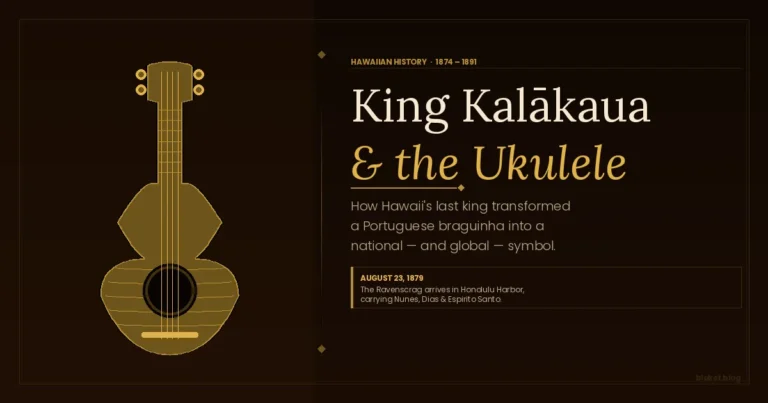
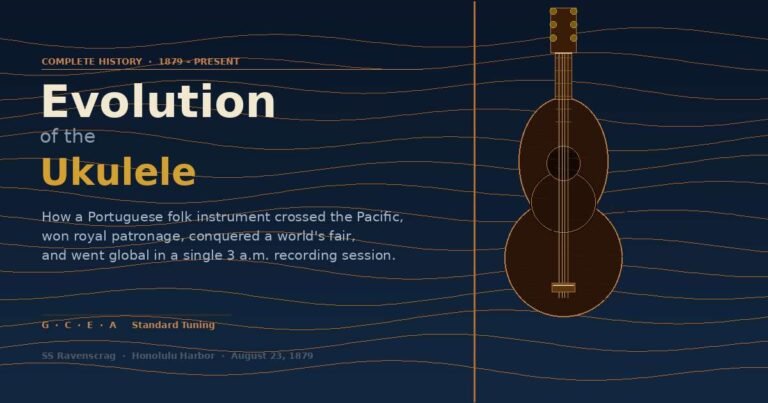
By 1915, when mainland America encountered the ukulele at the Panama-Pacific Exposition, the instrument had roughly four decades of cross-cultural evolution behind it. Portuguese immigrants — primarily from the Madeira Islands — had brought the machete de braga and related instruments to Hawaiʻi when they arrived aboard the ship Ravenscrag on August 23, 1879. Among the passengers were craftsmen Manuel Nunes, Augusto Dias, and José do Espírito Santo, who subsequently established luthiery workshops in Honolulu.
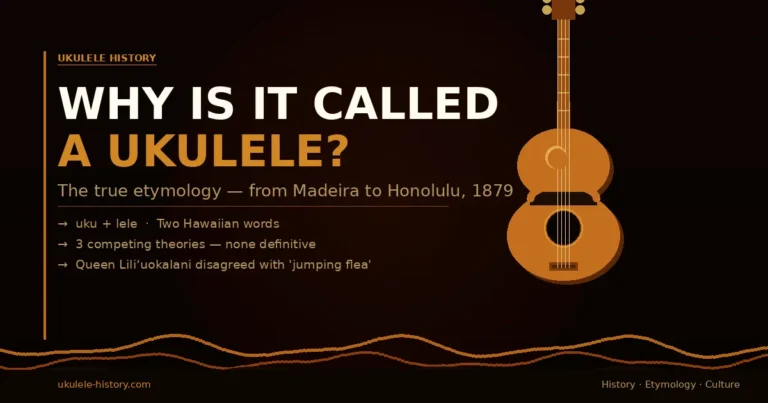
Hawaiian craftsmen and musicians adapted that Portuguese foundation over the following decades, selecting koa wood for its particular tonal qualities and refining the instrument’s dimensions and tuning. The etymology of the word “ukulele” is itself a matter of genuine historical debate — the most commonly cited Hawaiian translation is “jumping flea,” though alternative interpretations exist. What isn’t disputed is that by 1915, the ukulele was already the product of at least a generation of Hawaiian musical and craft tradition: not a recent invention, and not a straightforward Portuguese import.
FAQs
Why did the ukulele become so popular in the 1920s? Several forces converged at once: the 1915 Panama-Pacific Exposition gave millions of mainland Americans their first live encounter with the instrument, Tin Pan Alley promoted it as easy enough for any amateur, and radio carried ukulele music and instruction into homes no touring performer could reach. The instrument was cheap, portable, and learnable in an afternoon — a combination that matched the moment precisely.
Who was the most famous ukulele player of the 1920s? Cliff Edwards, performing as “Ukulele Ike,” was the decade’s most prominent figure. His Broadway appearances — including the original cast of “Lady Be Good” in 1924 — and his commercial recordings made the instrument credible as a professional tool rather than a beginner’s toy. May Singhi Breen matched his influence in the amateur market through nationwide radio instruction and hundreds of published arrangements.
Did the ukulele connect to jazz music in the 1920s? Not directly. Jazz was built around brass, woodwinds, piano, and rhythm instruments — the ukulele wasn’t a standard jazz band component. Performers like Cliff Edwards brought jazz-inflected techniques to their ukulele work, but the instrument lived primarily in Tin Pan Alley popular song and vaudeville rather than inside the jazz tradition itself.
What role did the Panama-Pacific Exposition play? The 1915 fair in San Francisco was the ukulele’s national mainland debut. The Hawaiian Pavilion drew enormous crowds, and live performances gave millions of Americans their first real encounter with the instrument. Within a year of the fair’s close, mainland manufacturers were producing ukuleles and music stores were stocking them as a standard product category.
When did the 1920s ukulele craze end? The arrival of talking pictures in 1927 began pulling Americans toward passive entertainment rather than home music-making. Radio followed the same direction, featuring professional orchestras over amateur instruction. The Great Depression then compressed consumer spending on instruments sharply. The first American golden age wound down by the early 1930s — though the instrument never disappeared, and it returned to mass popularity in the 1950s and again in the twenty-first century.
Conclusion
The ukulele’s Jazz Age moment was brief, improbable, and genuinely transformative. An instrument most mainland Americans didn’t know existed in 1914 had, within five years, become a household object — listed in Sears catalogs, broadcast on radio, performed on Broadway, and strummed in parlors from coast to coast.
No single force drove that arc. The Exposition introduced the instrument. Tin Pan Alley provided the music. Mass manufacturers provided the access. Radio provided the instruction. And performers like Cliff Edwards and May Singhi Breen provided proof that it was worth taking seriously.
For a deeper look at what came before — the Portuguese craftsmen who built the ukulele’s ancestors in Honolulu starting in 1879 — and what came after, including the mid-century revival and the instrument’s current global spread, the Ukulele History archive traces every era in the same depth.
Get unstuck today by reading our breakthrough-focused expert articles.