
Acoustic vs Electric Ukulele: Proven Expert Selection Guide
Choosing a ukulele isn’t just about picking a cool design—it’s the decision that dictates how often you’ll actually pick it up to practice. The right build fits your daily routine, while the wrong choice leaves you fighting low volume or tangling with annoying cables. If you are still weighing your options across the entire instrument family, check out our master types of ukuleles guide to picking the right one to see how the different shapes stack up before you buy.
Traditional acoustic models rely entirely on centuries-old woodwork design to project sweet, natural melodies from a hollow body. Purely electric models discard the traditional soundhole entirely, using specialized pickups to send raw string signals directly into amplifiers or headphones.
- For Beginners: An acoustic ukulele offers immediate playability, requires zero extra gear, and provides a lightweight learning experience at a lower cost.
- For Performers: An electric ukulele allows you to plug directly into a sound system, clear a large room without microphone feedback, and sculpt your tone with effects pedals.
Acoustic vs Electric Ukulele at a Glance
The Main Difference:
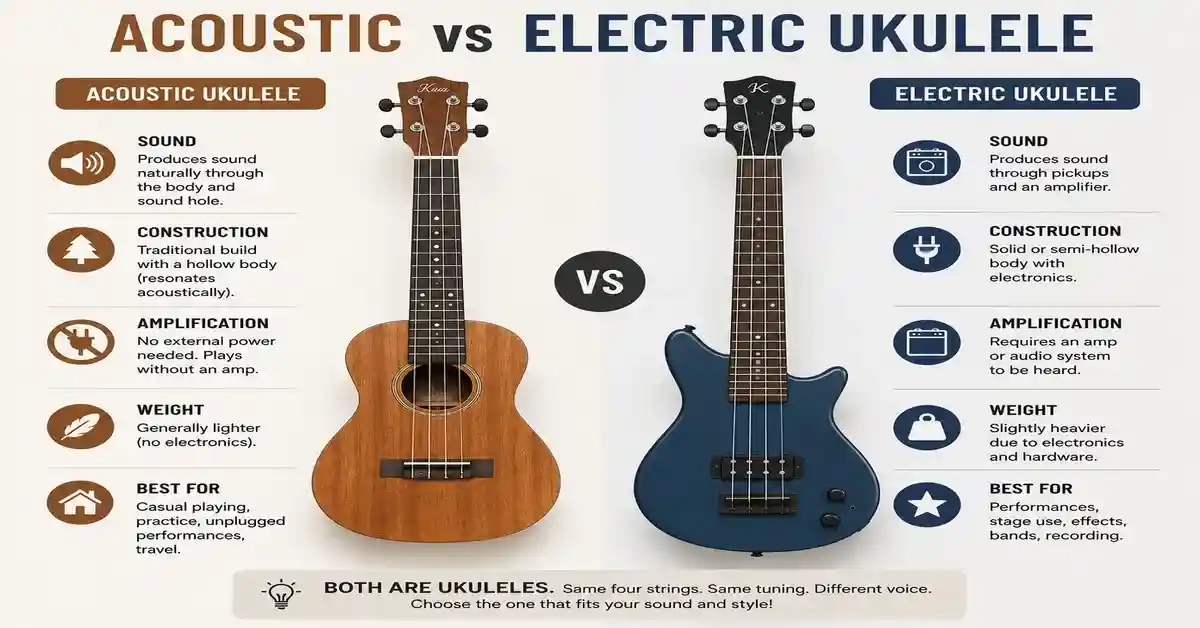
Acoustic ukuleles use a hollow wooden body to amplify string vibrations naturally, producing a traditional, woody tone. Electric ukuleles use a solid or semi-hollow body with electronic pickups that require an external amplifier or headphones to be fully heard.
Which one to choose:
Pick acoustic for campfires, casual strumming, and portable play. Pick electric for loud live bands, easy home recording, or completely silent nighttime practice.
Quick Comparison Table
| Feature | Acoustic Ukulele | Electric Ukulele |
| Sound Production | Natural air chamber resonance | Electronic string vibration capture |
| Amplification | Not required | Mandatory for performances or group play |
| Tone | Warm, bright, organic, woody | Highly customizable (clean to distorted) |
| Portability | High; grab-and-go with no gear | Moderate; requires cables and an amp |
| Weight | Feather-light (hollow construction) | Noticeably heavier (solid wood blocks) |
| Maintenance | Low; watch out for humidity cracks | Moderate; battery swaps and wiring checks |
| Price Range | Budget-friendly ($40 to $300+) | Moderate to high ($100 to $500+) |
| Best For | Casual beach strumming, home learning | Live stage bands, bedroom headphone practice |
What Is an Acoustic Ukulele?
The classic acoustic ukulele is the pure, unplugged experience. It’s entirely self-sufficient—no cables, no power outlets, just your fingers and the wood. If you lean toward this traditional route, the tenor scale is easily the most popular choice for performance. You can dive deeper into its specific tone and dimensions in our tenor ukulele guide.
How an Acoustic Ukulele Produces Sound
When you pluck a nylon string, it doesn’t just vibrate the air. It transfers energy straight down through the saddle into the bridge. The bridge acts like a speaker cone, vibrating the thin wooden top plate of the uke. That moving wood pumps the air inside the hollow body, sending warm sound waves straight out of the soundhole.
Common Features
Acoustic ukes are defined by their thin, hollow body shells. They feature a traditional open soundhole directly beneath the fretboard and use an ultra-light wooden bridge glued to the top face to maximize raw structural vibrations.
Pros and Cons of Acoustic Ukuleles
- Pros: Instant playability with zero setup time, lightweight frames, and a genuine, woody folk tone.
- Cons: Limited maximum volume, and the thin wood is prone to cracking during sudden weather or humidity changes.
What Is an Electric Ukulele?
A pure electric ukulele—often built as a solid-body instrument—adapts electric guitar mechanics into a compact frame. It treats the physical strings purely as an electronic data source.
How an Electric Ukulele Works
Because a solid-body electric ukulele has no hollow sound chamber, strumming it unplugged produces a faint, metallic whisper. Instead of moving air, the moving strings interact with electronic components hidden directly beneath them. These components convert mechanical motion into an electrical audio signal that travels down an instrument cable.
Built-In Pickups and Electronics
Electric models rely on two primary styles of pickups:
- Piezo Pickups: Situated under the saddle, these use tiny crystals to turn structural string pressure changes into clean electric audio.
- Magnetic Pickups: These rely on wire coils wound around magnets to track steel-core strings, producing an audio output identical to a miniature electric guitar.
Pros and Cons of Electric Ukuleles
- Pros: Near-silent unplugged practice, feedback-free stage performance, and works with delay, reverb, and rock distortion pedals.
- Cons: Requires external power to be heard properly, heavier to hold, and loses that traditional folk look.
Acoustic vs Electric Ukulele: Key Differences
Sound Quality
Acoustic instruments produce a rich web of natural overtones where the wood type shapes the final voice. Electric models deliver highly precise, isolated note tracking. While it can sound slightly sterile completely dry, the audio signal is clean and completely free from environmental room noise.
Volume and Projection
An acoustic ukulele hits a natural volume ceiling quickly. If you push it too hard, the tone distorts unpleasantly, making it poor for roaring concert venues. An electric model’s volume is restricted only by the size of the amplifier or sound system you plug it into.
Tone Characteristics
Acoustic tone is unalterable—a mahogany body sounds deep, and a spruce top sounds crisp. Electric models offer a blank canvas. By twisting a knob on your amplifier, you can morph a bright soprano layout into a deep, jazz-style voice or a gritty rock lead.
Portability
Acoustics win on pure convenience. Toss it into a cloth gig bag, walk out the door, and you are ready to play anywhere. An electric ukulele itself is small, but traveling with it means carrying heavy 1/4-inch cables, batteries, and a portable amplifier or headphone rig.
Maintenance Requirements
Acoustic care focuses on wood preservation, which means monitoring humidity levels so the body doesn’t warp. Electric care focuses on electronic integrity. You will periodically need to replace internal batteries and ensure the input jack remains tightly screwed into the frame.
Durability
Solid-body electric ukuleles are incredibly rugged. Since they lack a fragile, thin hollow shell, they can handle accidental bumps and intense climate shifts without cracking. Acoustic models require delicate handling to avoid shattering the thin soundboards.
Price Comparison
Excellent beginner acoustic setups retail from $50 to $90. Basic electric models generally start around $120 because electronic components add base production costs. For a detailed breakdown of pricing trends across top brands, check out our complete guide to buying an electric ukulele.
Which Ukulele Is Better for Beginners?
Learning on an Acoustic Ukulele
Acoustics provide a simple, uninhibited learning pathway. Because there are no knobs, settings, or power switches to worry about, a first-time student can dedicate 100% of their focus to finger placement and natural strumming patterns.
Learning on an Electric Ukulele
Learning on an electric build introduces a secondary technical layer. Beginners must learn how to balance volume stages and manage cables safely. However, the ability to plug in headphones means a shy beginner can practice mistakes repeatedly without disturbing anyone in the house.
Best Choice for First-Time Players
The acoustic ukulele remains the optimal choice for absolute beginners. The lighter body is easier to hold correctly, and the immediate acoustic feedback teaches you how to control dynamic hand pressure naturally.
Acoustic vs Electric Ukulele for Different Playing Styles
Casual Home Practice
Acoustic is ideal. You can grab it off a wall hanger and practice a quick song during a three-minute break without turning on electronic equipment.
Live Performances
Electric rules the stage. Trying to mic an acoustic ukulele with a standing microphone restricts your movement and regularly causes piercing acoustic feedback loops over the venue monitors.
Recording Music
Electric options allow for direct tracking into home studio computers, completely bypassing the need for expensive, sound-treated studio rooms or high-end microphones.
Traveling Musicians
Acoustics handle campfires and beach trips with ease. If you travel heavily to urban venues or hotels, a solid-body electric with a headphone jack keeps your late-night songwriting completely stealthy.
Do Electric Ukuleles Need an Amplifier?
Yes, if you want anyone else to hear you. Without an amplifier, a solid-body electric ukulele produces an acoustic volume output that is less than 10% of a standard acoustic frame. It is loud enough for you to hear your own chord choices in a quiet room, but it cannot project far enough to entertain an audience or blend with other musicians. An amplifier is strictly necessary for any group play, busking, or public performance.
Who Should Buy an Acoustic Ukulele?
Ideal Player Profile
The traditionalist, the outdoors enthusiast, and the budget-conscious beginner.
Best Use Cases
- Strumming folk and traditional Hawaiian songs on the back porch.
- Taking along on camping trips, beach days, or casual park picnics.
- Singing along quietly in small acoustic circles.
Who Should Buy an Electric Ukulele?
Ideal Player Profile
The gigging loop-artist, the home studio producer, and the apartment dweller who practices late at night.
Best Use Cases
- Playing in a loud rock, pop, or reggae band alongside drums and bass.
- Using multi-effects pedals to create ambient soundscapes.
- Tracking clean audio directly into digital audio workstations without microphone bleed.
Acoustic-Electric Ukuleles: The Best of Both Worlds?
What Is an Acoustic-Electric Ukulele?
An acoustic-electric model is built exactly like a standard hollow acoustic ukulele, but includes a built-in piezo pickup under the saddle and an output jack mounted on the bottom bout.
[Acoustic-Electric Layout]
Hollow Wooden Body + Internal Under-Saddle Pickup = Play Acoustic OR Plug In
Advantages and Drawbacks
You get the light weight and natural, woody voice of an acoustic when playing unplugged at home, plus the instant ability to run an instrument cable directly into a stage amplifier when performing. However, the internal electronics and plastic battery boxes add a small amount of dampening weight to the wooden body, slightly reducing the raw unplugged resonance compared to a pure acoustic instrument.
The Verdict
Your final selection rests entirely on your musical goals. Choose an acoustic ukulele if you want a classic, lightweight experience that keeps the traditional, warm spirit of the instrument alive anywhere you travel. Choose an electric ukulele if you plan to hit the stage, love experimenting with sound-altering guitar pedals, or need a tool for silent midnight practice sessions.