Tenor Ukulele: Size, Sound, Tuning & Beginner Tips
Finding the right instrument size can completely change how fast you learn to play. Smaller models can feel cramped, making your fingers feel tangled when trying to hold down a simple chord.
The tenor ukulele is a massive favorite for both beginners and experienced stage musicians. This breakdown covers the standard size, the deeper sound profile, common tuning methods, and practical tips to get you playing comfortably right away.
What Is a Tenor Ukulele?
The tenor ukulele is a larger, full-bodied instrument within the traditional four-string family. It sits right between the concert and the baritone sizes.
Originally built to offer stage performers more volume, this model features a longer neck and a wider body. It uses the exact same chord shapes as a standard pocket uke, so you do not have to learn any new finger placements if you decide to switch sizes later.
Why It Is Different from Other Ukuleles
Unlike small sopranos, this version is engineered for projection. The larger frame allows the wood to vibrate deeply, giving the notes more sustain. When you pluck a string, the sound rings out for several seconds instead of fading away instantly.
Tenor Ukulele Size and Dimensions
The physical build of the instrument is the main reason players choose it over other options.
Standard Tenor Ukulele Size
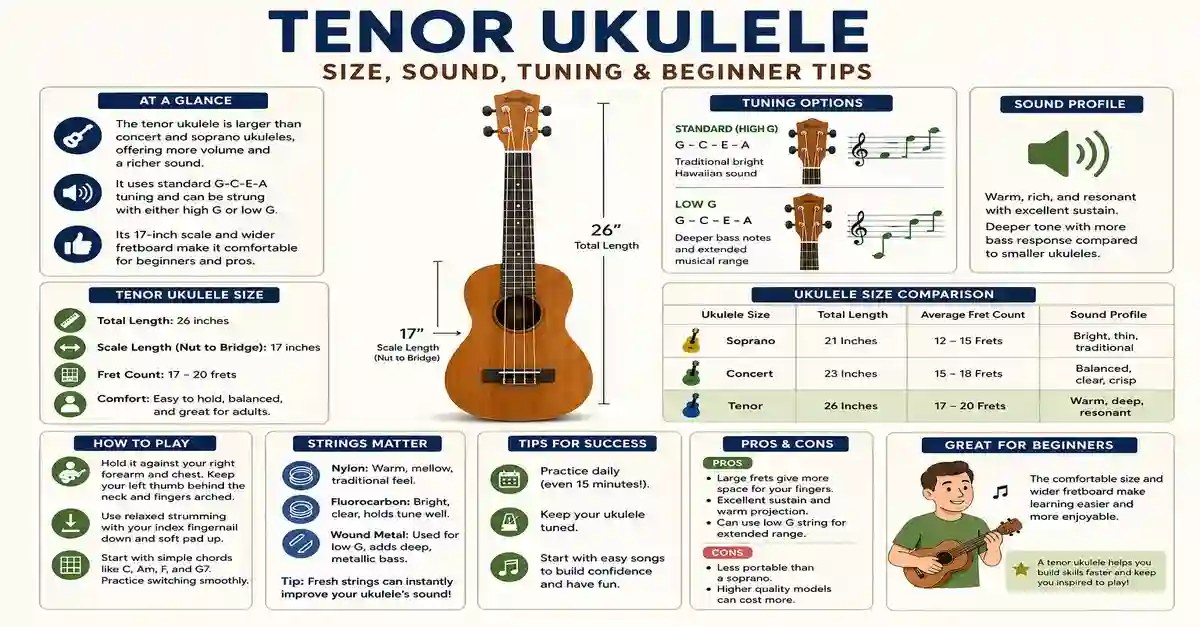
A standard tenor ukulele size measures about 26 inches in total length. The scale length—the distance from the nut to the bridge—is exactly 17 inches. This roomier layout allows the neck to hold up to 20 frets comfortably.
How Comfortable It Feels to Hold
In my testing, adults find this frame much easier to hold against their chest without it slipping. The extra weight gives the instrument a balanced feel. You do not have to grip the neck tightly just to keep the body from dropping while you strum.
How Does a Tenor Ukulele Sound?
The acoustic voice of this model is noticeably different from the classic, bright plink of smaller builds.
Warm and Rich Tone
Because the wood body cavity is deeper, it moves more air inside the chamber. This creates a warm and rich tone with plenty of bass response. It sounds less like a toy and much closer to a classic nylon-string acoustic guitar.
Why Many Players Prefer the Sound
Performers love this voice because it sounds great for solo fingerpicking. The lower frequencies fill a room easily. If you want to play modern pop songs, jazz, or classical melodies, the deeper tone provides a serious, professional acoustic backing.
Tenor Ukulele Tuning Explained
Keeping your strings at the correct pitch is simple, but this specific size gives you a couple of cool choices.
Standard G-C-E-A Tuning
The standard tenor ukulele tuning uses the classic notes G-C-E-A. If you use a high-G string, you keep the traditional bouncy Hawaiian sound where the top string sits higher in pitch than the strings below it.
Low G vs High G Tuning
Many tenor players switch out the top string for a low-G option. This replaces the thin nylon string with a thicker, metal-wound string tuned an octave lower. It expands your musical range, letting you hit deep, resonant bass notes that are impossible to play on a smaller soprano.
Why Choose a Tenor Ukulele?
There are a few clear reasons why this specific model dominates the music scene today.
Better Sound Quality
The combination of a 17-inch scale and a deep body results in excellent projection. The notes sound clear and punchy without getting muddy, even when you strum hard during a fast song.
More Space for Fingers
If you have wide hands or thick fingers, small fretboards can be incredibly frustrating. The wider gaps between frets on this model give your fingertips plenty of room to land cleanly without buzzing against neighboring strings.
Great for Beginners and Professionals
This model grows with your skill level. Beginners enjoy the comfortable physical layout, while professional musicians rely on its stage volume and structural reliability for live concerts and studio recordings.
Tenor Ukulele vs Concert Ukulele
Choosing between a tenor ukulele vs concert ukulele is a very common decision for new buyers.
Size Comparison
The concert sits at 23 inches, making it three inches shorter than the tenor. The tenor neck is wider and longer, providing extra frets for high-velocity soloing and complex chord shapes. For a closer look at the smaller mid-size alternative, check out our complete guide concert ukulele breakdown.
Sound Differences
The concert ukulel keeps a bit more of that traditional, bright island bite. The tenor ukulele drops the pitch focus down into the mid-range, offering a deeper, warmer acoustic output that carries more natural room echo.
Which One Should You Choose?
If portability is your main goal, the concert model is easy to pack into a small backpack. However, if you want the most comfortable playing experience and a mature, deep tone, the larger choice is almost always the better option. To see how these compare to the tiny soprano or giant baritone, check out our types of ukuleles guide to picking right one to find your ideal match.
Quick Comparison: Scale and Fret Space
| Ukulele Size | Total Length | Average Fret Count | Sound Profile |
| Soprano | 21 Inches | 12 – 15 Frets | Bright, thin, traditional |
| Concert | 23 Inches | 15 – 18 Frets | Balanced, clear, crisp |
| Tenor | 26 Inches | 17 – 20 Frets | Warm, deep, resonant |
How to Use a Tenor Ukulele
Getting started requires a few basic physical adjustments to keep your posture relaxed.
Holding the Ukulele Properly
Rest the wide part of the body against your right forearm, pressing it gently into your ribs. Your left hand should support the neck loosely, keeping your thumb straight behind the fretboard so your fingers can arch naturally over the strings.
Basic Strumming Techniques
Do not use a rigid wrist. Relax your forearm and use the back of your index fingernail to stroke downward across the strings. On the way back up, let the soft pad of your finger catch the strings to create a smooth, steady rhythm.
Learning Simple Chords
Start with one-finger shapes like C major and A minor. Practice switching between them smoothly before moving on to multi-finger shapes like F major and G7. The larger fret gaps on the neck make these early chord transitions much easier to clean up.
Tenor Ukulele Strings
The material of your strings dictates how your instrument feels and sounds under your fingers.
Different Types of Strings
- Nylon: The traditional option. They feel soft to press down and produce a warm, mellow, old-school tone.
- Fluorocarbon: Thinner and higher in tension. They produce a very bright, clear sound and hold their tune incredibly well during weather changes.
- Wound Metal: Often used for the low-G string to add a deep, metallic guitar-like ring to your low notes.
How Strings Affect Sound
Heavy-tension strings pull more energy out of the wood soundboard, increasing your total volume. If your instrument sounds a bit quiet or dull, swapping out old factory nylon strings for a fresh set of clear fluorocarbons can instantly brighten up the voice.
Tips for Playing Tenor Ukulele Better
Practice Daily
Consistency matters much more than long, exhausting sessions. Spending just fifteen minutes practicing chord changes every single day builds muscle memory far faster than practicing for two hours only on weekends.
Keep Your Ukulele Tuned
Nylon and fluorocarbon strings stretch out constantly when new. Use a clip-on digital tuner to adjust your pitch before every single song so you do not accidentally train your ears to accept flat notes.
Start with Easy Songs
Don’t rush into complex classical pieces. Pick simple three-chord pop tracks or traditional folk tunes. Mastering a basic song from start to finish builds massive confidence and keeps practice sessions fun.
Pros and Cons of a Tenor Ukulele
Pros
- Large frets provide maximum finger space for adult hands.
- Excellent sustain and deep, warm acoustic projection.
- Can be set up with a low-G string for an extended musical range.
Cons
- Larger frame is less portable than a tiny soprano.
- High-quality wood models can cost a bit more due to the larger build size.
Is a Tenor Ukulele Good for Beginners?
Yes, it is an exceptional choice for beginners. A common misconception is that new players should always start on the smallest size available, but tiny fretboards often discourage people with average or large hands. Starting on a roomier scale eliminates fret crowding errors, letting you focus entirely on your rhythm and strumming patterns without painful hand cramping.
Finding Your Rhythm
Getting a great sound is all about choosing hardware that matches your body size. By choosing a roomier frame that lets your hands move freely, you can avoid early frustration, master your basic chord structures quickly, and enjoy a rich acoustic tone that keeps you excited to practice every single day.