
Things to Know Before Buying a Ukulele: Complete Beginner’s Guide
Buying your first instrument is exciting, but walking into a music store without a plan usually leads to buyer’s remorse. Choosing the wrong ukulele makes learning unnecessarily difficult. Many beginners accidentally pick an instrument that is too small for their hands or buy a cheap toy that cannot stay in tune.
This guide covers the core factors you need to consider, from body sizes and pricing brackets to building materials and playability features.
Understand the Different Types of Ukuleles First
Quick Answer Box
- The Golden Rule: When exploring things to know before buying a ukulele, the most critical factor is selecting the right body size for your hand size and comfort.
- Best for Beginners: Concert and tenor models offer the best balance of spacing, warm tone, and traditional sound for new players.
The Four Main Varieties
Ukuleles belong to four primary categories based on size and tuning layout.
- Soprano: Soprano Ukulele is the smallest, traditional size with a bright, plinky sound.
- Concert: Concert Ukulele has Slightly larger body with a louder, fuller tone and longer neck.
- Tenor: Tenor Ukulele is Popular with modern performers because of its deep sound and wide fret spacing.
- Baritone: Baritone Ukulele is the largest type, tuned differently (D-G-B-E) like the top four strings of a guitar.
If you want a traditional sound but need room to move your fingers, our detailed breakdown of the types of ukuleles covers how these designs evolved over time. For the vast majority of adult beginners, concert or tenor models are the easiest to start with.
Choose the Right Ukulele Size for Your Needs
Soprano Size
Measuring around 21 inches, the soprano offers that classic Hawaiian island sound. In my testing, players with thicker fingers often struggle to press single notes cleanly on a soprano fretboard without muting adjacent strings.
Concert Size
At 23 inches, the concert size adds a bit more body resonance and volume. The frets are spaced further apart, giving you extra room to navigate chord shapes comfortably.
Tenor Size
The tenor scales up to 26 inches. Many fingerstyle players prefer this size because the string tension is higher, providing better projection and clarity for individual notes.
Baritone Size
At 30 inches long, the baritone abandons the traditional G-C-E-A tuning completely. It sounds deep, warm, and very much like an acoustic guitar.
Best Size for Beginners
If you are completely unsure, go with a concert model. It gives you the traditional sound profile while accommodating average hand sizes without causing finger cramping. For an exact measurement chart across these models, check out our resource on ukulele sizes explained.
Set a Realistic Budget Before Shopping
You do not need to spend a fortune, but avoiding the lowest price bracket is smart.
| Price Category | Average Cost | Materials Used | Best For |
| Entry-Level Toy | Under $30 | Plastic / Cheap laminate | Toddlers / Wall decoration |
| Beginner Quality | $60 – $120 | High-grade laminate woods | Serious adult beginners |
| Mid-Range | $150 – $300 | Solid wood tops / Premium laminates | Intermediate players / Performers |
| Premium | $400+ | All-solid woods (Koa, Mahogany) | Professionals / Collectors |
I highly recommend budget-conscious beginners spend between $70 and $100. Instruments in this price zone use durable wood composites that hold their tune while delivering a pleasant, resonant sound.
Pay Attention to Build Quality
Wood Quality
Laminate wood consists of thin layers glued together, making it resistant to temperature changes. Solid wood vibrates better and matures in tone as it ages, but it requires careful humidity monitoring.
Neck Construction
Look straight down the fretboard from the headstock. The neck should be perfectly straight. A warped neck changes the string height, making chords painfully difficult to press down.
Frets and Fingerboard
Run your fingers along the edges of the neck. The metal fret wires should feel smooth. If they stick out or feel sharp, the instrument has poor finishing work and will cut your fingers while playing.
Tuning Pegs
Avoid friction pegs that stick straight out the back of the headstock. Geared tuners, which extend out to the sides, offer much finer control and keep your strings from slipping out of pitch.
String Quality
Cheap instruments ship with stiff, clear plastic strings that hurt to press and sound dull. Look for brands that come pre-strung with high-quality nylon or fluorocarbon strings like Aquila or D’Addario.
Acoustic vs Electric Ukulele
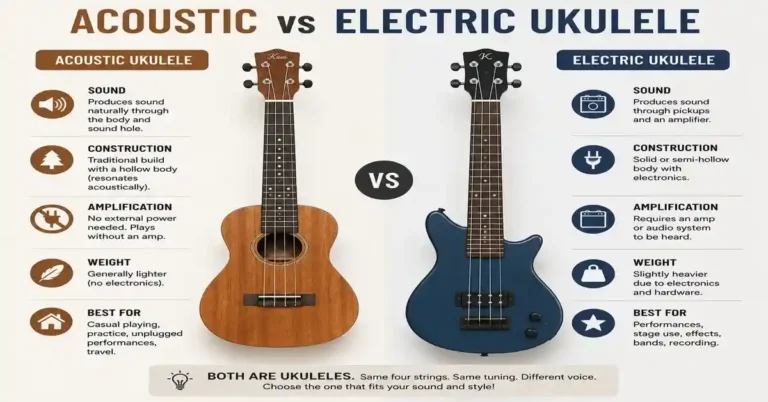
An acoustic ukulele relies purely on its hollow wood body to project sound. An electric ukulele includes an internal pickup system, allowing you to plug into an amplifier or audio interface.
[Acoustic Ukulele] -> Natural Body Resonance -> Traditional Acoustic Sound
[Electric Ukulele] -> Internal Pickup -> Instrument Cable -> Amplifier / Interface
- Acoustic Pros: Lightweight, portable, cheaper, and works anywhere instantly.
- Electric Pros: Great for stage performances, easy to record, and allows the use of effects pedals.
- Which is better? Stick to a standard acoustic model first unless you plan to play in a loud band immediately. For a full breakdown of pickup types and amplification gear, see our guide on acoustic vs electric ukuleles.
Check the Sound Before Buying
When play-testing an instrument, strum a simple chord and let it ring out. Good tone quality should sound balanced—not too muddy in the bass frequencies and not too piercingly sharp in the treble notes.
Volume and sustain matter just as much. A well-built instrument continues to hum for several seconds after your strum finishes. Decide whether you prefer a bright, snappy tone typical of maple and spruce, or a deep, warm sound associated with mahogany and koa.
Consider Your Playing Goals
Learning for Fun
If your main goal is strumming casual folk songs on the couch, a lightweight laminate concert ukulele is perfect. It is durable, low-maintenance, and easy to pick up on a whim.
Performing on Stage
If you want to play at open mic nights, buy an acoustic-electric model with a built-in tuner. This allows you to plug into the venue’s sound system directly without using an external microphone.
Traveling with a Ukulele
For camping or backpacking, consider a durable travel ukulele made from high-grade polycarbonate. These materials tolerate extreme heat and humidity shifts without cracking.
Recording Music
If home studio tracking is your priority, look into solid wood tenor models. The larger body gives microphones a cleaner, richer sound profile to capture during tracking sessions.
Essential Accessories You May Need
Do not forget to allocate a small portion of your budget for a few basic utility items.
- Clip-on Tuner: Essential for keeping your nylon strings in pitch during your first few weeks of heavy stretching.
- Padded Gig Bag: Protects the thin wood body from structural dings and environmental scratches.
- Extra Strings: Nylon strings inevitably wear thin or snap over time; keeping a backup set saves a trip to the store.
- Strap: Keeps the instrument stabilized against your chest, letting your fretting hand move freely along the neck.
Common Mistakes to Avoid When Buying a Ukulele
The biggest pitfall is buying an instrument purely because of a colorful paint job or a pretty graphic pattern. Manufacturers often use thick paint to hide low-grade woods and structural flaws that stifle the instrument’s natural vibration.
Another common error is skipping user reviews regarding structural longevity. A model might sound great on day one, but poor bridge gluing can cause the top to lift up after a few months of string tension. If you want a deep dive into these retail traps, read our article detailing common mistakes when buying your first ukulele.
Best Ukulele Features for Beginners
When shopping around, always prioritize a comfortable neck profile that fits easily into the web of your hand. Look for high tuning stability, meaning the geared pegs turn smoothly without catching or slipping.
Easy playability comes down to the “action”—the distance between the strings and the frets. Low action means you do not have to press down hard to get a clean note, preventing early finger fatigue while your calluses build up.
Final Thoughts
Focus your search entirely on comfort, build quality, and body size rather than aesthetic decorations. A plain-looking mahogany instrument that stays in tune will always serve you better than a flashy, painted model that sounds like cardboard. Choose a size that fits your hands, set a realistic budget, and grab an instrument that actively encourages you to practice every day.
Stay sharp all year long with our consistently updated expert reads.